

Enaibo Asiayei: When pen becomes talking drum of culture


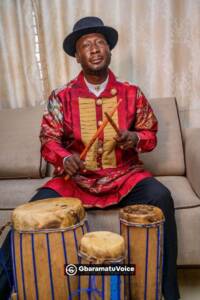
By Engr. Yeigagha Henry, JP
Birthdays are sometimes treated as mere milestones on the calendar, but the birthdays of men whose lives have become intertwined with the memory of a people deserve a different language.
They call for reflection, gratitude, and the kind of words that do not merely celebrate a man but attempt to measure the footprints he has left upon the sands of time. Today, such words belong to Enaibo Asiayei, the cultural journalist whose pen has become one of the enduring talking drums of the Niger Delta.
Born and bred in Bobougbene, Ayakoromo, Enaibo carries within him the rich genealogical tapestry of Ayakoromo.
He descends from the Mr. Dokori Asiayei lineage of the Agborowei Family of Assesaghabiri Quarter, Ayakoromo, while also tracing his ancestry to the Alara Family of the prestigious Bigborogha Royal Family of Ayakoromo.
In him, therefore, journalism is not merely a profession acquired; it is an inheritance of memory, identity, and belonging.
His educational journey began in the familiar landscape of Ayakoromo, where his formative years were nurtured within the community that would later become one of the principal subjects of his cultural storytelling.
He attended Ngbilebiri Primary School, Ayakoromo, for his primary education before proceeding to Ayakoromo Grammar School, Ayakoromo, for his secondary education.
At Ayakoromo Grammar School, his leadership qualities were already visible; in his final year, he served as the Senior Prefect, a position that spoke not only to the confidence his school authorities reposed in him but also to the early emergence of the leadership, communication, and organisational qualities that would later become defining features of his public life. Those formative years, spent within the cultural atmosphere of his ancestral community, laid the foundation for the inquisitive mind, observant temperament, and deep cultural consciousness that would later find expression in journalism, research, literature, and cultural advocacy.
From the classroom to the creek, and from the village environment to the wider Niger Delta, his education became the first chapter in a lifelong engagement with knowledge, identity, and the preservation of memory.
Perhaps this explains the peculiar intimacy with which he writes about culture. He does not approach the traditions of his people as an outsider standing at a distance from the village square.
He writes as one who has heard the drums, understood the silences, watched the tides rise and fall, listened to the elders and absorbed the stories that travelled from one generation to another by the warmth of the fireside.
Some journalists report events, and some journalists preserve civilisation. Enaibo Asiayei belongs to the latter tradition. His journalism has increasingly transcended conventional news reporting to become an archive of Ijaw memory. His sustained research into Ijaw culture, tradition, and spirituality dates back to 2009, a journey that was publicly described in 2024 as fifteen years of cultural research and documentation.
Through his writings, interviews, cultural investigations, and historical reflections, he has given voice to traditions that might otherwise disappear quietly into the graveyard of forgotten things.
His professional identity as the Cultural Journalist of GbaramatuVoice is, therefore, more than a designation; it is almost a calling. By 2022, he was publicly identified as the Managing Editor of GbaramatuVoice Media Organisation, a position through which his journalism continued to give prominence to the histories, festivals, traditions, struggles, heroes, institutions, and aspirations of creek communities.
In 2025, as GbaramatuVoice marked its tenth anniversary, he was recognised for ten years of meritorious service to the organisation. His career there has demonstrated that when people lose the stories of their ancestors, they gradually lose the vocabulary with which they describe themselves.
This is why his journalism possesses an uncommon sense of place. The river is never merely water in his narrative; the creek is never simply geography. The canoe, forest, ancestral compound, traditional ruler, fisherman, festival, and community elder become fragments of a larger cultural manuscript. Perhaps his greatest gift is his determination to document before memory disappears.
His journeys through the Niger Delta have taken him into communities where history survives largely in the memories of elders, giving him the unusual opportunity to transform fading oral traditions into enduring written records.
In an age when modernity increasingly threatens indigenous knowledge and oral traditions, the cultural journalist assumes a responsibility far greater than writing headlines.
He becomes a custodian. He gathers what time is attempting to scatter, records what death may otherwise erase, and gives visibility to communities whose existence is often reduced to statistics whenever development, oil exploration, environmental degradation, or political contestation dominates public discourse.
Enaibo has travelled that road with uncommon commitment. His work demonstrates that journalism can be both a profession and a cultural mission. His pen can interrogate power and, at the same time, kneel respectfully before heritage.
It can speak about contemporary politics in one breath and return to the ancestral world in another. He is a journalist, but also a student of society; a storyteller, but also a collector of memories; a cultural commentator, but also a bridge between generations.
His academic journey has, in recent years, added a new intellectual dimension to this cultural vocation. By June 2026, Enaibo was publicly identified as a postgraduate student in the Department of English and Literary Studies at Delta State University, Abraka.
His academic engagement with literature takes him through African literary traditions from the pre-colonial and colonial periods to post-colonial literature, modernism, and contemporary ecological and ecocritical approaches.
This is a fitting academic pathway for a man whose professional life has been devoted to storytelling, because literature provides the intellectual architecture through which culture, identity, memory, history, and human experience are preserved and interpreted.
His academic pursuit does not represent a departure from journalism; rather, it deepens it. The journalist who has spent years listening to the voices of the creek now studies the literature through which societies give artistic expression to their collective experiences.
The cultural archivist has entered the classroom, and the classroom has, in turn, provided another lens through which he can examine the world he has long documented.
His journalism and scholarship, therefore, meet at the same crossroads: the preservation and interpretation of human memory.
For the Ijaw people, whose civilisation has been sustained through oral history, music, folklore, ritual, communal memory, and ancestral narratives, Enaibo’s work is therefore invaluable. The written word now stands beside the talking drum as another vessel of remembrance.
His cultural research, particularly the journey that began in 2009, is not simply about yesterday; it is about ensuring that tomorrow will know what yesterday looked like.
There is perhaps no more evocative illustration of his intimate relationship with his riverine heritage than the story surrounding his traditional marriage. On November 3, 2022, Enaibo and his wife, Emily Ekanpou, celebrated their traditional marriage ceremony amid the devastating flooding of the period.
The ceremony was conducted in a local canoe, reportedly because there was no sufficiently developed land space available for the event. In a land where the river is a highway, livelihood, and repository of ancestral memory, the occasion became an almost cinematic expression of riverine resilience.
The image is almost literary: a cultural journalist, born and bred in the creek, entering matrimony upon the waters that have shaped the civilisation he has spent his career documenting.
His marriage ceremony, therefore, becomes more than a personal celebration; it becomes an unusual metaphor for the man himself.
The boat was his ceremonial platform, the creek his ancestral landscape, and tradition the language through which he celebrated one of life’s most important passages. Enaibo did not merely write about the riverine civilisation; on one of the most important days of his life, he allowed that civilisation to write a chapter of his own story.
But every writer is also a product of his roots. From Bobougbene came the boy; from the Asiayei lineage came his inheritance; from the Agborowei Family of Assesaghabiri Quarter came one strand of his ancestral identity; from the Alara Family of the Bigborogha Royal Family came another; from Ayakoromo came the environment that shaped his consciousness; and from the wider Ijaw world came the expansive cultural canvas upon which he has continued to write.
There is something profoundly beautiful about a man spending his life documenting the culture from which he himself emerged. He becomes both the subject and the storyteller. His own ancestry becomes part of the larger story he seeks to preserve.
On this birthday, therefore, we celebrate not merely the passage of another year, but the continuing journey of a man whose pen has refused to allow the cultural treasures of his people to remain silent.
Enaibo Asiayei is, in many respects, a talking drum with a byline. He beats the rhythm of memory. He summons the ancestors into conversation with the living. He reminds the younger generation that before modern institutions arrived, their people already possessed systems of governance, spirituality, communal responsibility, art, philosophy, and identity.
He reminds the wider world that the Niger Delta is not merely a geography of crude oil and environmental conflict; it is also a civilisation of rivers, kingdoms, families, traditions, music, courage, and enduring humanity.
So, on this special occasion, may the years ahead enlarge his intellectual horizon, strengthen his literary voice, and deepen his commitment to the preservation of culture. May his pen continue to travel where memory is fading and return with stories worth keeping. May he continue to document the elders before they become ancestors, the traditions before they become folklore, the communities before their landscapes change, and the stories before silence takes them away.
May history itself be kind enough to preserve the name of Enaibo Asiayei among those who understood that journalism is not only about telling the world what happened today; sometimes, it is about ensuring that a people will still remember who they were tomorrow.
Happy birthday, Enaibo Asiayei; the cultural journalist, the custodian of memory, and the talking drum of the Ijaw story.
May your pen never run dry, your voice never grow faint, and your journey through the corridors of culture, journalism, and literature continue to illuminate generations yet unborn.


Twenty-five years in vineyard: Celebrating Priestly journey, legacy of Rev. Fr. Sebastian Ngene
By Jerome-Mario Utomi Some anniversaries simply mark the passage of time, and there are an…