

Government, industry back NCC’s plan to boost digital learning through Zero-Rated Access

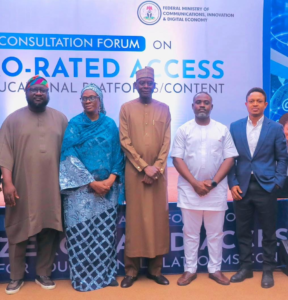
L-R: UNESCO Representative, Abuja office, Dr Yinka Ayorinde; Director ICT, Federal Ministry of Education, Hajjia Zainab Abubakar Sulieman; Director Policy, Competition and Economic Analysis, Nigerian Communications Commission, Mr Ayuba Shuaibu; Representative of Federal Ministry of Communications Innovation and Digital Economy, Mr Emmanuel Udo Udiok; and Senior Manager Instructional Design, U-Lesson Group, Mr Enje Egede; during the Stakeholders Consultation Forum on Zero-Rated Access on Educational Platforms/ Content in Abuja
Stanley Ihedigbo
Stakeholders from the public and private sectors have thrown their weight behind the Nigerian Communications Commission (NCC)’s proposed framework to provide zero-rated access to educational platforms and digital learning content, describing the initiative as a transformative step towards expanding educational opportunities and promoting digital inclusion across Nigeria.
The endorsement came during the Commission’s first public consultation forum on the proposed framework titled “Zero-Rated Access to Educational Platforms and Content in Nigeria,” held in Abuja on Tuesday.
The consultation brought together representatives from government ministries, telecommunications operators, development organisations, educational technology companies and other critical stakeholders to deliberate on strategies for ensuring that students and learners can access accredited educational resources without incurring data charges or through specially supported internet access arrangements.
Participants at the forum included representatives of the Federal Ministry of Communications, Innovation and Digital Economy, the Federal Ministry of Education, the United Nations Educational, Scientific and Cultural Organization (UNESCO), the Association of Licensed Telecommunications Operators of Nigeria (ALTON), the Nigerian Governors’ Forum (NGF), uLesson Group, and other stakeholders within the communications and education sectors.
Speaking during the opening session, the Executive Vice Chairman and Chief Executive Officer of the NCC, Dr. Aminu Maida, said the proposed framework was developed after an Industry Committee thoroughly examined its technical, policy, regulatory and commercial implications.
Represented by the Commission’s Director of Policy, Competition and Economic Analysis, Mr. Ayuba Shuaibu, Maida explained that the consultation paper was designed to encourage broad stakeholder engagement and gather valuable public input before the framework is finalised.
According to him, meaningful collaboration among all stakeholders is essential to developing a practical framework that reflects industry realities while advancing Nigeria’s educational and digital transformation agenda.
He stressed that the framework must accommodate the perspectives of telecommunications operators, educational institutions, content providers, government agencies, development partners, civil society organisations, teachers, students and other beneficiaries.
“The framework must strike the right balance between educational needs, regulatory effectiveness, transparency, fairness and long-term sustainability,” Maida stated.
He explained that the initiative aligns with the Commission’s commitment to promoting digital inclusion by expanding access to quality education through technology.
According to him, the proposal seeks to remove connectivity barriers that prevent millions of Nigerians from accessing online educational resources, particularly students in underserved and low-income communities.
Maida noted that the initiative also forms part of the Commission’s broader strategy of leveraging technology to support national educational objectives while encouraging inclusive participation in Nigeria’s growing digital economy.
He said the consultation forum provided stakeholders with an opportunity to critically examine the objectives of the Zero-Rated Access Initiative, review its proposed implementation framework and contribute technical, regulatory, commercial, operational and legal perspectives necessary for its successful execution.
Discussions during the forum focused on several critical issues, including implementation models, eligibility requirements for educational platforms and content providers, governance structures, consumer protection measures, operational guidelines and the principles for identifying accredited educational resources that would qualify for zero-rated access.
Stakeholders also made recommendations aimed at strengthening the proposed framework and ensuring its sustainability over the long term.
Many participants emphasised that achieving the objectives of the initiative would require stronger collaboration among government institutions, telecommunications operators, internet service providers, educational institutions and development partners.
They also highlighted the need for sustained investments in broadband infrastructure, improved network capacity and affordable internet services to guarantee reliable connectivity for millions of learners expected to benefit from the programme.
According to stakeholders, expanding digital infrastructure remains crucial to ensuring that zero-rated educational services deliver meaningful impact across both urban and rural communities.
The Commission assured participants that all submissions and recommendations received during the consultation process would be carefully reviewed and incorporated into the final framework where appropriate.
Maida expressed confidence that once implemented, the initiative would significantly improve access to quality education, promote digital literacy, bridge the country’s digital divide and support Nigeria’s broader socio-economic development goals through technology-driven learning.
The proposed zero-rated educational access initiative is expected to make online learning more affordable and accessible by eliminating or substantially reducing the cost of internet access to approved educational platforms, thereby enabling more Nigerians to acquire knowledge and digital skills regardless of their financial circumstances.





T Pumpy, Ambassadors shine at London land exhibition 2026
T Pumpy Ltd and its ambassadors took centre stage in London as the company hosted its 2026…