

2027: Nigerians must find right person to defeat Tinubu — Babachir Lawal

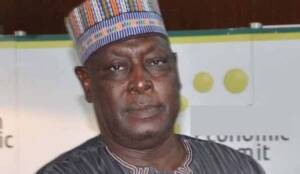
Michael Olumide
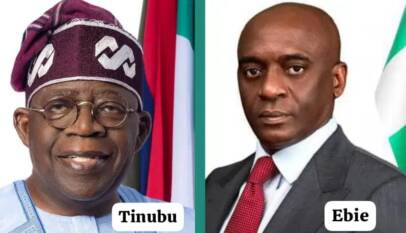
As political activities ahead of the 2027 general elections begin to gather momentum, former Secretary to the Government of the Federation (SGF), Babachir David Lawal, has called on Nigerians to carefully evaluate prospective leaders and support the candidate best equipped to address the nation’s challenges, insisting that replacing President Bola Ahmed Tinubu with a less competent leader would only worsen the country’s situation.
Lawal made the remarks during an interview on Frontline, a current affairs programme on Eagle 102.5 FM, Ilese-Ijebu, Ogun State, where he addressed issues ranging from governance and national security to political accountability and preparations for the 2027 general elections.
The former SGF argued that the realities confronting citizens across the country demonstrate that government performance must be assessed through its impact on people’s lives.
According to him, Nigerians in every part of the federation are grappling with economic difficulties, rising living costs, and insecurity, making it necessary for leaders to be held accountable for outcomes rather than intentions.
He maintained that governance should not be shielded from scrutiny by ethnic or political loyalties, stressing that public office holders must be evaluated by the quality of life experienced by the people they govern.
“Bola has not been able to give us good governance. Even Nigerians believe that, except for you Yoruba, who say, even if he’s killing everybody, as long as he’s a Yoruba man, he’s okay with us. Yoruba people have that mindset. He’s our son.
He can do no wrong. Even if he’s doing wrong, we look the other way now. Even if there’s no other person alive, people still defend him. But I am not that kind of person. I judge governance by results, not by tribe or sentiment. Nigerians are suffering everywhere, whether in the North, South, East or West, and the government must be held accountable for that suffering,” Lawal stated.
He identified insecurity as one of the most significant indicators of governance failure, arguing that the continued attacks on communities and the loss of lives in various parts of the country underscore the need for urgent and decisive government action.
According to him, the government must go beyond acknowledging security challenges and focus on delivering concrete solutions capable of protecting citizens and restoring public confidence.
“Insecurity is still one of the most urgent challenges. You cannot build a country where people are being killed in their villages and life continues as normal. Government cannot just keep acknowledging problems without solving them,” he said.
Lawal expressed concern that many rural communities remain vulnerable to violent attacks and often receive inadequate attention from authorities.
He noted that repeated incidents involving killings, displacement of residents, destruction of homes and places of worship have contributed to growing public frustration.
“When people are killed in villages, houses are burned, churches are destroyed, and nothing meaningful happens afterward, it creates a sense that life is cheap. That is not how a government should operate,” he added.
The former SGF further criticised what he described as a pattern of official statements that fail to translate into meaningful improvements on the ground.
He argued that Nigerians are increasingly interested in practical solutions rather than explanations or assurances.
“People are tired of hearing that the government is aware of insecurity or economic hardship. Awareness is not the issue. Action is what matters. Nigerians want to see results, not statements,” he said.
Lawal dismissed claims that his criticisms were politically motivated, insisting that his position is based solely on governance performance and national interest. He argued that citizens should be able to assess leaders objectively without being labelled or pressured into supporting political figures because of ethnic, regional, or partisan affiliations.
“My criticism has nothing to do with political alignment. Nigerians must be free to assess leadership based on performance. That is how democracy should work,” he stated.
He also stressed that democratic accountability extends beyond elections, maintaining that elected officials remain answerable to the people throughout their tenure in office.
“Democracy does not end on election day. Leaders must remain accountable all the time. That is the only way governance improves,” he said.
The former SGF further highlighted the plight of rural communities, describing them as the segment of society most affected by insecurity and economic hardship. He argued that many of these communities suffer from weak government presence despite bearing the brunt of violent attacks and displacement.
“The people suffering the most are in rural communities. They are the ones being attacked, displaced, and forgotten. Government must do more to reach them,” he said.
According to Lawal, security remains the foundation upon which all other aspects of national development depend. He warned that meaningful economic growth, investment, and social progress would remain difficult without adequate protection of lives and property.
“If you cannot protect lives, then nothing else matters. Security is the foundation of everything,” he said.
Turning to the political landscape ahead of the 2027 general elections, Lawal urged Nigerians to focus on competence, leadership capacity, and proven records of performance when evaluating potential candidates.
He stressed that while defeating an incumbent president may be a political objective for some groups, the more important consideration should be whether an alternative candidate can provide better governance and improve the lives of citizens.
“Nigerians must look for the right person who can defeat Bola Tinubu. But defeating an incumbent is not enough. If we remove him and bring in someone worse, it will not help the country,” he said.
Lawal argued that Nigerian politics must move away from personality-driven campaigns and embrace issue-based assessments of candidates.
According to him, voters should pay greater attention to what aspirants have achieved in previous positions and what they are capable of delivering if elected.
“The issue is not just about removing anybody. It is about making sure that whoever comes in is better, more competent, and capable of delivering results that Nigerians can feel,” he stated.
He further called for a departure from identity politics, saying leadership should not be determined by ethnic background, regional sentiment, or emotional attachment.
“Leadership should not be based on emotion or tribe. It should be based on what people can do and what they have done before,” he said.
Reaffirming that his position was motivated by concern for national development rather than personal interests, Lawal maintained that the overriding goal should be to improve governance and the welfare of citizens.
“My concern is Nigeria. It is not about any individual or group. It is about who can govern better and improve the lives of people,” he said.
The former SGF concluded by urging Nigerians to use the period leading up to the 2027 elections to carefully evaluate political leaders and make informed decisions about the country’s future.
“We must move away from identity politics. What matters is who can fix the country, not where they come from. If you are not satisfied, you have the power to change leadership through your vote. That is democracy. We still have time. Nigerians must think carefully. The future depends on the choices we make,” Lawal said.
This version is structured in a newspaper-style format with a stronger lead, balanced narrative flow, and clear separation between the governance critique and the 2027 electoral message.

African Church celebrates 125th anniversary, lauds Gov. Eno’s leadership strides in A’Ibom.
Tony Okoh, Uyo African Church, founded on 13th October 1901, will begin its …