

Trust deficit threatens acceptance of NYSC reforms, Oshoma warns

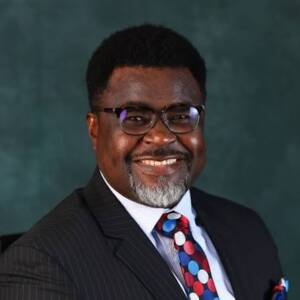
Michael Olumide
A legal practitioner, human rights advocate and public policy analyst, Liborous Oshoma, has insisted that the Federal Government cannot lawfully implement the proposed reforms to the National Youth Service Corps (NYSC) without first amending the law establishing the scheme and obtaining the approval of the National Assembly.
Speaking during an exclusive interview on Frontline, a current affairs programme on Eagle 102.5 FM, Ilese-Ijebu, Ogun State, Oshoma said while reforming the NYSC is both necessary and desirable, any fundamental changes affecting its structure and operations must comply with constitutional and legislative procedures because the scheme is a creation of an Act of the National Assembly.
His comments come after the Federal Executive Council (FEC), chaired by President Bola Ahmed Tinubu, approved what has been described as the most comprehensive reform of the NYSC since its establishment 53 years ago.
Among the proposed reforms are the extension of the orientation course from three weeks to six weeks, divided into three phases focusing on leadership development, career readiness and specialised training. The reforms also propose the creation of 11 specialised service streams aimed at equipping corps members with practical skills aligned with their academic qualifications and career aspirations.
Oshoma argued that while the executive has the authority to propose reforms, it cannot alter provisions already contained in the NYSC Act through executive directives alone.
“The NYSC is a creation of law. If you want to reform it, those reforms must also take the form of amendments to the law,” he said.
He maintained that executive approval alone cannot change the statutory framework governing the scheme.
“Certainly, the Federal Government cannot introduce reforms to the NYSC unilaterally without amending the Act,” he stated.
Using the appointment of the NYSC Director-General as an example, Oshoma explained that where the Act specifically requires the office to be occupied by a serving military officer, the government cannot appoint a civilian without first amending the relevant section of the law.
“If the Act says there shall be a Director-General who must be a serving military officer, you cannot appoint a lawyer or politician without first amending that provision. Meaningful reforms must begin with legislative amendments,” he added.
The legal practitioner also stressed the importance of extensive stakeholder consultations before forwarding any amendment bill to the National Assembly.
According to him, the government should engage universities, serving corps members, youth organisations and other stakeholders to build public confidence and ensure that the reforms reflect the aspirations of young Nigerians.
He urged lawmakers to commence constituency-based consultations to obtain wider public input.
“The discussions should not be limited to government officials. Universities, corps members and young Nigerians who are directly affected should all have opportunities to contribute. You cannot create programmes for young people without hearing their views,” he said.
Oshoma criticised what he described as the recurring practice of older political leaders making far-reaching decisions for younger Nigerians without adequately involving them in the decision-making process.
He noted that many of today’s senior political leaders assumed important public offices at relatively young ages but now appear reluctant to grant similar opportunities to the present generation.
According to him, broader youth participation would produce reforms that enjoy greater legitimacy and public acceptance.
The public policy analyst also attributed the growing scepticism surrounding the proposed reforms to what he described as a widening trust deficit between government and citizens.
He observed that many Nigerians now instinctively question government initiatives regardless of their merits because of declining public confidence in governance.
“The challenge is that because of the trust deficit in government, people become suspicious of every reform. Rather than examining the proposals objectively, they immediately begin to see them through the lenses of ethnicity, religion and politics,” he said.
Despite existing challenges confronting the NYSC, Oshoma maintained that the scheme remains one of Nigeria’s most important nation-building institutions and should be strengthened rather than abolished.
He recalled that several African countries had previously studied Nigeria’s NYSC model as a framework for promoting national unity and integration.
“If we address insecurity and improve governance, the NYSC remains a fantastic programme that deserves continuous reform,” he stated.
He also rejected claims that the scheme has outlived its usefulness, noting that thousands of graduates secured permanent employment through their service year while many others discovered career opportunities that shaped their professional lives.
“There are people who got jobs because of NYSC. Others discovered career paths during their service year that eventually defined their future. So it is not all doom and gloom,” Oshoma said.
He added that institutional reforms should be seen as part of the natural evolution of public institutions, provided they remain consistent with the law and reflect public aspirations.
Supports Local Fabric for NYSC Uniform
On the controversy surrounding proposals to replace the traditional NYSC khaki uniform with locally produced fabrics such as Adire, Oshoma urged Nigerians to focus on the economic benefits rather than ethnic considerations.
The debate followed comments by the Minister of Youth Development, Ayodele Olawande, who suggested that locally made Adire could form part of future NYSC uniforms before later clarifying that no final decision had been taken.
Oshoma dismissed fears that adopting indigenous fabrics would undermine national unity.
According to him, Nigerians already embrace indigenous materials such as Aso Oke across ethnic boundaries, making concerns over the origin of Adire unnecessary.
“We should look at the economics rather than tribal sentiments. Anything that promotes local production and strengthens our economy should unite us,” he said.
He argued that large-scale government patronage of Nigerian-made fabrics would stimulate local textile manufacturing, encourage investment, create jobs and reduce dependence on imported materials.
Questioning the continued reliance on imported fabrics for NYSC uniforms, Oshoma said government procurement should instead support domestic industries.
“Should we continue spending public money importing materials for uniforms when we can produce them here? That is simply enriching importers instead of creating jobs for Nigerians,” he said.
He further argued that indigenous fabrics, including Adire, Aso Oke and Isi Agu, represent valuable components of Nigeria’s cultural heritage and deserve greater commercial patronage.
Drawing comparisons with Ghana’s successful promotion of Kente cloth, Oshoma said Nigeria should similarly embrace its indigenous textiles without politicising their ethnic origins.
“The same way nobody argues about which tribe owns Kente in Ghana, we should stop turning everything into an ethnic issue. Let’s promote what is uniquely Nigerian because that is what will strengthen our economy,” he said.
He concluded that reforms capable of stimulating local industries should equally promote national unity by encouraging Nigerians to value and patronise products manufactured within the country.



Excitement as Akwa Ibom people await presidential visitors
By Solomon Essiet Other things being equal, His Excellency, President Bola Ahmed Ti…