

Tinubu’s reforms have pushed North from poverty to destitution — Ardo

Michael Olumide Alabi
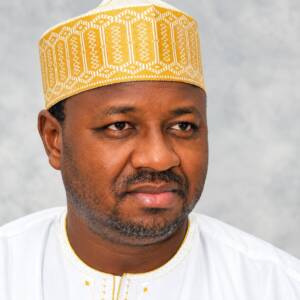
Convener of the League of Northern Democrats and key promoter of the All-Democratic Alliance (ADA), Dr Umar Ardo, has accused the administration of President Bola Ahmed Tinubu of short-changing Northern Nigeria in the distribution of federal resources, political appointments and government opportunities.
Ardo made the allegations during an interview on Frontline, a current affairs programme on Eagle 102.5 FM, Ilese-Ijebu, Ogun State, where he assessed the performance of the Tinubu administration in Northern Nigeria and its possible political implications ahead of the 2027 general election.
According to him, the alleged imbalance was particularly evident in the actual release of funds to federal ministries, which he claimed had favoured the South over the North.
“The budget to the ministries and the actual releases of funds, the North could not have been equated with the South at all. By far, the South has received more releases about five times than the Northern ministries,” he said.
Ardo stressed that the issue should not be assessed solely based on budgetary allocations approved on paper, but also by examining the actual funds released to ministries and government institutions.
He also alleged that several important parastatals and government opportunities had gone disproportionately to the South, particularly the South-West.
Political appointments
Ardo also criticised the distribution of political appointments under the Tinubu administration, arguing that it had created a perception of exclusion among some Northerners.
He said: “The perception which is also true is that he has Yorubanised his administration. He has given all the critical appointments to his own kinsmen and Yorubas. The Hausa/Fulanis and other extended groups in the North feel short-changed, and this perception has created damage to this administration in Northern Nigeria.”
He, however, acknowledged the complexities involved in determining what constitutes Northern representation, particularly because states such as Kwara and Kogi have significant Yoruba cultural and historical connections.
According to him, appointments involving people from those states could be viewed differently depending on whether the analysis is based on geographical location, ethnic identity or political history.
“Because Tinubu is Yoruba, all appointments that are Yoruba, whether it is in the North, Kwara or Kogi, are seen as Yoruba,” he said.
Economic reforms
The political commentator also criticised the economic reforms of the Tinubu administration, including the removal of fuel subsidy, arguing that the policies had not translated into meaningful economic benefits for Northern Nigerians.
“I do not see in any way how the North has benefited from the economic reforms,” Ardo said.
He argued that inflation and the rising cost of living had significantly reduced the purchasing power of Nigerians, with the impact, in his view, more severe in the North because of the region’s large population of poor and vulnerable citizens.
“The economic reform is actually biting on everybody, and it has bitten on the North more than the South,” he said.
According to Ardo, the economic situation had pushed many people beyond poverty into what he described as “destitution.”
“In the North now, our people have gone more destitute than they are even poor. It has completely wiped out the middle class, and the upper class is just those who are the government,” he said.
He questioned whether salary increases had adequately compensated workers for the decline in the purchasing power of the naira and the rising cost of goods and services.
Businesses under pressure
Ardo also argued that the economic reforms had placed significant pressure on businesses, including major industrial operators.
He cited Aliko Dangote and the controversies surrounding the operations of the Dangote Refinery as examples of the difficulties businesses face in the current economic environment.
“If you look at the business scheme in Northern Nigeria, the largest business holder in the country from the North is Aliko Dangote. Under the reform of Tinubu’s administration, he is fighting the battle of his life to keep his business going,” he said.
Ardo maintained that businesses require a stable economic environment, predictable policies and adequate consumer purchasing power to thrive.
Insecurity remains a major concern
On security, Ardo criticised the administration over what he described as inadequate progress in addressing insurgency and other security challenges affecting parts of Northern Nigeria.
“Tinubu didn’t learn from those who have knowledge and have tried hard to stop security problems in Nigeria. He should be able to provide a solution to it, but he has done nothing,” he said.
He nevertheless acknowledged that Nigeria’s security challenges were complex and could not be eliminated easily.
“I know that those problems can’t be easily eradicated,” he added.
Ardo said insecurity had consequences beyond the loss of lives and property, noting that farmers, traders and businesses could not operate effectively when communities remained under threat.
He argued that Nigeria could learn from countries that had confronted prolonged insurgencies, saying he had written a book examining how South America addressed a three-decade insurgency within one year.
Infrastructure concerns
Ardo also raised concerns over infrastructure in the North, citing the condition of major roads, including the Kaduna-Kano road.
He argued that poor roads increased transportation costs, prolonged travel time and affected economic activities across communities.
He questioned whether the Tinubu administration had done enough to address some of the longstanding developmental challenges inherited from previous governments.
2027 political implications
With the 2027 general election approaching, Ardo said the economic and security experiences of Northern voters would be important issues in assessing the Tinubu administration.
He argued that the support President Tinubu received from the North in the 2023 presidential election should not be interpreted as a permanent political commitment.
According to him, voters would assess the administration based on their experiences with insecurity, poverty, inflation, economic reforms and governance.
Ardo consequently made a prediction about Tinubu’s possible performance in the region if the 2027 election is free and fair.
“If a free, fair and credible election is conducted in Nigeria, Tinubu can’t get 10 percent of the Northern part,” he said.
He repeated the position, saying: “If they conduct the election in a free and fair manner, Tinubu will not win 10 percent of the North.”



NCC moves to deepen private sector participation in Internet Governance
L- R: Board Member, African Network Information Centre, Mr. Dewole Ajao; Chief Operating O…
