

N31bn: Governor Eno taking 165,912 beneficiaries out of poverty

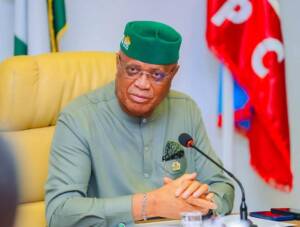
By Emmanuel Nicholas
On July 27, 2026, the Akwa Ibom State Executive Council approved ₦31 billion for a comprehensive economic empowerment program under Governor Pastor Umo Eno.
The allocation is straightforward and unprecedented in scale: ₦1 billion for each of the state’s 31 Local Government Areas. A total of 165,912 residents have been targeted statewide.
Through distributing the fund equally across all Local Government Areas instead of concentrating it in the capital, the government is taking economic decision-making and opportunity directly to the grassroots, where the need is greatest.
The immediate macroeconomic effect of this injection is a direct boost to the state’s Gross Domestic Product. ₦31 billion spent on productive assets like starter packs, farm inputs, tricycles, and SME grants does not sit idle. It circulates in local markets, pays artisans, buys materials, and hires labour.
In rural and semi-urban economies, every naira spent tends to turn over multiple times. With a conservative fiscal multiplier, the programme can generate over ₦43 billion in total economic activity across the state within the first year, raising output in agriculture, trade, and services simultaneously in all 31 Local Government Areas.
Beyond GDP, the programme is designed to expand the state’s Internally Generated Revenue base. For years, IGR in Akwa Ibom has relied heavily on a few urban centers and federal allocations. This changes that structure.
The 165,912 beneficiaries being supported as traders, farmers, transporters, and cooperative members will become new formal economic actors. As they register businesses, pay market levies, transport dues, and business premises fees, revenue will rise at both the local government areas and state levels.
The revenue growth will come not from higher taxes, but from a wider tax base created by new and expanded enterprises.
Job creation is built into every component of the programme. Youths and women receiving skills acquisition training with starter packs will move from unemployment into self-employment. Farmers receiving inputs will need labour for clearing, planting, and harvesting.
The transport empowerment scheme that includes tricycle distribution will create jobs for drivers, mechanics, and spare parts dealers.
SME development grants will enable existing micro-businesses to expand and hire. If only one out of every three beneficiaries sustains or creates a single job, the programme will generate more than 50,000 direct and indirect jobs across the state.
The impact on enterprises across Akwa Ibom will be most visible in the informal sector, which currently employs the majority of the population.
By providing working capital as grants rather than loans, the program reduces the risk of business failure in the first two years. Starter packs convert training into immediate production in trades like tailoring, catering, welding, and ICT. Support for women cooperatives gives them bulk purchasing power and better access to markets.
As these enterprises grow and formalize to access further support, they become visible to financial institutions, creating a pathway from micro to small and medium enterprises.
Agriculture stands to gain significantly because each Local Government Area will receive support for farmers with inputs. This lowers the cost of production and increases yield per hectare for cassava, plantain, palm oil, vegetables, and fisheries that dominate local farming.
When combined with grants for traders, the link between farm and market is strengthened. More produce means more agro-processing, storage, and packaging businesses springing up at the local government level.
The result will be higher farm incomes, reduced post-harvest losses, and a measurable contribution to food security and agricultural GDP in the state.
Transport is another critical area targeted. The inclusion of a transport empowerment scheme with tricycle distribution addresses the problem of mobility and logistics in rural communities.
Poor transport raises the cost of moving goods and people, making rural products uncompetitive. New tricycles will create employment and reduce fares and travel time. Cheaper logistics will allow farmers to get produce to urban markets faster and at lower cost, while also making manufactured goods more affordable in villages.
This integration of rural and urban supply chains improves efficiency across the state economy.
Poverty alleviation is central to the design. Via targeting youths, women, traders, and farmers, the programme reaches those at the base of the economic pyramid. ₦1 billion per LGA ensures geographical equity so that no community is excluded.
The approach is not consumption-based handouts but investment in productive capacity. Skills, capital, and tools given to beneficiaries are assets that can generate income for years. This is how poverty is reduced structurally, not just temporarily.
There is also a less quantifiable but equally important impact: hope. Years of unemployment and economic stagnation have created despair in many rural households.
The visibility of a ₦1 billion programme in every LGA sends a signal that the government is present and investing. When a young person receives a starter pack or a woman’s cooperative gets a grant, it creates a demonstration effect in the community.
That renewed confidence translates into greater willingness to invest, take risks, and participate in the economy.
For rural communities in each of the 31 Local Government Areas, the programme means development does not have to migrate to Uyo. A youth can start a workshop in Etinan instead of moving to the city. A farmer in Oruk Anam can buy inputs locally. A transporter in Ibeno can serve local routes profitably.
This reduces pressure on urban housing, traffic, and social services. Over time, rural towns will develop their own markets, processing centers, and service hubs, retaining population and talent that would otherwise leave.
This decentralized approach is also how the economic gap between urban centers and rural areas begins to close. Equal allocation of ₦1 billion to each Local Government Area is an equalization policy. While Uyo has more banks and infrastructure, Local Government Areas like Okobo, Ini, and Urue-Offong/Oruko will now have capital to build local enterprise ecosystems.
As rural incomes rise, consumption increases and rural economies begin to supply urban centers, reversing the one-way flow of goods and money. Balanced development becomes possible.
The strength of the program lies in sectoral linkages. Agriculture produces raw materials for SMEs. Transport moves both farm produce and manufactured goods.
Enterprises provide services to farmers and transporters. Women cooperatives create demand for local products. The ₦1 billion in each LGA, therefore, does not stay in one sector. It multiplies across agriculture, trade, transport, and services, creating a resilient local economy that is less dependent on external shocks.
For all these benefits to materialize, implementation and accountability will be key. The per-Local Government structure reduces bureaucracy but requires transparent beneficiary selection to reach the 165,912 target. Monitoring must ensure funds are used for productive purposes and not diverted
In the medium to long term, the ₦31 billion moves from being expenditure to investment.
More enterprises mean more taxes and levies. More jobs mean more consumption, poverty sent out and higher VAT collection.
More agricultural output means food sufficiency and less importation of food from other states. Within three to five years, the increase in IGR and reduction in poverty-related social spending can make the program self-sustaining.
The state’s fiscal health improves as the economy grows from the bottom up.
Governor Pastor Umo Eno deserves commendation for this visionary initiative. At a time when many governments focus only on big projects in the capital, he chose to take ₦1 billion to every Local Government Area and put it directly in the hands of the people.
That decision shows leadership that understands that real development starts from the village square, not just the Government House.
Through targeting 165,912 residents, with a special focus on youths, women, farmers and traders, he is deliberately bringing down the index of poverty and creating a new class of wealth owners in Akwa Ibom. This is governance with a human face.
This is more than a spending programme. It is a statement of faith in the capacity of ordinary Akwa Ibom people to build prosperity when given the tools.
Governor Umo Eno has shown that he is not just managing the state, he is repositioning it for inclusive growth. Through empowering the downtrodden and expanding opportunities for the middle class, he is laying the foundation for a state where no community is left behind.
In years to come, this ₦31 billion intervention will be remembered as the turning point when wealth and opportunity were truly decentralized in Akwa Ibom State.




African Church celebrates 125th anniversary, lauds Gov. Eno’s leadership strides in A’Ibom.
Tony Okoh, Uyo African Church, founded on 13th October 1901, will begin its …