

Flames, floods, safe Abia: Why Safety Commission is no longer a policy luxury, operational necessity

By John Thompson
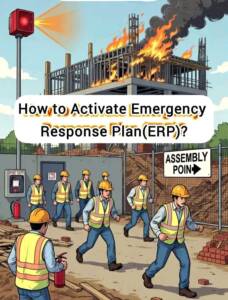
A thick plume of black smoke billowing over the industrial district of Aba on April 9, 2026, served as yet another stark reminder of a recurring nightmare.
As flames tore through parts of the Nigerian Breweries facility, threatening adjoining buildings and sending residents fleeing for safety, the question on everyone’s lips was not just about the cause of the blaze, but about whether the state’s emergency systems are truly equipped for the moment of crisis.
This incident, which occurred just days ago, is the latest in a troubling pattern of fire outbreaks that have repeatedly tested the resilience of Abia State.
From devastating shop fires on New Umuahia Road to an inferno that razed the second floor of a building on Lagos Street in Aba, the destruction has consistently outpaced prevention.
While the Abia State Government has often been swift to respond and commiserate, the frequency of these disasters has reignited a critical conversation: is it time to move beyond reactive measures to a robust, proactive framework?
The government’s response to these emergencies has painted a picture of a service struggling with inconsistencies.
In April 2025, when a fire gutted a two-storey building on Lagos Street, an enraged Governor Alex Otti expressed his fury that responding fire service officers had allegedly switched off their phones, rendering them incommunicado while the building was completely razed.
“I have directed them to do a thorough investigation to ascertain why the phone numbers of fire service officers were off during the fire outbreak,” a visibly furious Governor Otti stated at the time.
“We spent a lot of money to equip them, buying them vehicles. In the past, they have responded very quickly and effectively, but unfortunately, this one, they didn’t.”
However, contrasting this failure, a midnight fire at Exclusive Bar in Umuahia in July 2025 saw a much more favorable outcome. Thanks to a swift response by the Abia State Fire Service, the flames were contained before they could spread to a nearby clinic, potentially averting a major disaster.
While this incident highlighted growing capacity, it also underscored the urgent need for a system that delivers the same efficiency 100% of the time.
Beyond Fire, the rains are here. The flood threat poses another challenge to emergency preparedness in Abia extends beyond fire to seasonal flooding.
The National Emergency Management Agency (NEMA) has listed Abia as the second-highest risk state for flooding in the Southeast region, with eight local government areas, including Abia Central and Aba environs, identified as high-risk zones.
The Abia State Emergency Management Agency (ABSEMA) has made efforts to mitigate these threats, launching sensitization campaigns and identifying resettlement centers.
Yet, officials concede that many disasters surpass the state’s current capacity, requiring assistance from federal agencies and development partners. This reliance on external support highlights a significant gap in the state’s self-sufficiency when it comes to industrial and domestic safety.
In response to these challenges, the Otti administration has signaled a major policy shift. Rather than simply relying on the fire service to extinguish flames, the government is pushing for the establishment of the Abia State Safety Commission (ASSC), a dedicated body to be manned by safety professionals.
This initiative is not an isolated intervention. It is a core pillar of the Abia State 25-Year Development Plan (2025–2050), a comprehensive blueprint unveiled by Governor Otti to transform the state into a model of sustainable economic growth and social resilience.
The plan explicitly prioritizes “infrastructure and human security,” with a dedicated chapter on disaster risk reduction and industrial safety. Under its “Safe Abia” agenda, the 25-year plan mandates the creation of a stand-alone safety regulatory agency, the harmonization of all emergency response units, and the integration of occupational health and safety standards into every public and private sector project.
SDG Alignment: This vision directly advances SDG 9 (Industry, Innovation, and Infrastructure), particularly Target 9.1 on developing resilient infrastructure and Target 9.4 on upgrading industries to make them sustainable and safe. It also supports SDG 11 (Sustainable Cities and Communities), specifically Target 11.5 on reducing disaster-related deaths and economic losses, and Target 11. B on implementing integrated disaster risk reduction strategies.
“You cannot build a prosperous ‘New Abia’ on a foundation of preventable tragedies,” a key promoter of the Commission explained, speaking on condition of anonymity. “The 25-year plan targets a 70% reduction in workplace and domestic fire incidents by 2035. The Safety Commission is the engine that will drive that target.”
The ASSC’s goal is to ensure the enforcement of safety standards across homes, offices, markets, and industries, a crucial move in a state experiencing rapid industrial growth. The policy has already received approval from the State Executive Council and is currently awaiting legislative action.
ISPON’s pivotal role in the new Abia safety architecture can be said to be germane in realizing the set objectives.
As the government lays the legal groundwork, the technical expertise is being provided by the Institute of Safety Professionals of Nigeria (ISPON), the nation’s apex body for the practice of safety management.
ISPON has been actively involved in drafting the operational framework for the proposed Safety Commission, ensuring that it meets international best practices.
“ISPON is not a bystander in this process,” said Engr. Timothy Iwuagwu, in an exclusive interview. “We have already submitted a blueprint to the Abia State Government outlining the competency requirements for commission staff, the certification protocols for safety auditors, and the need for mandatory safety training across all 17 LGAs. Our role is to ensure that the Safety Commission is not a political appointment ground but a professional citadel.”
SDG Alignment: A professionalized safety commission advances SDG 16 (Peace, Justice, and Strong Institutions), particularly Target 16.6 on developing effective, accountable, and transparent institutions. It also supports SDG 8 (Decent Work and Economic Growth), specifically Target 8.8 on protecting labor rights and promoting safe working environments for all workers.
Just as the debate over the Safety Commission gains urgency, the global community prepares to mark the World Day for Safety and Health at Work on April 28. This year’s theme, “A safe and healthy working environment is a fundamental principle and right at work,” resonates deeply in Abia State, where preventable workplace incidents remain alarmingly common.
SDG Alignment: This theme directly echoes SDG 8.8 and reinforces the ILO’s recognition of a safe working environment as a fundamental right. Without institutional enforcement, however, a right unclaimed remains a right denied.
ISPON has seized this moment to launch an intensive training and awareness campaign across Abia’s industrial and commercial hubs. From April 20 to April 30, 2026, the institute is conducting a series of trainings, workshops and public sensitization events under the banner “Safe Workplaces, Safer Abia.”
The training is billed to cover over 200 participants in three phases in the areas of:
– Importance of HSE in the Workplace.
– Understanding HSE Management System.
– Safety Legislation, Policies and Guidelines in Nigeria.
-Job Hazard Analysis.
– Accident Investigation and Reporting.
– HSE Communication.
As well as fire risk assessment, proper use of extinguishers, and evacuation drills. However, the institute argues that without the legal backing of a Safety Commission, these efforts remain voluntary and fragmented.
In Aba, ISPON facilitators are holding day-long sessions at the Ariaria International Market and the Aba textile, shoe and leather works hub, focusing on fire prevention, proper chemical storage, and emergency evacuation procedures.
In Umuahia, the training targets civil servants and hospitality workers, with drills at the state secretariat and major hotels.
The programme highlights also include traditional and social media campaigns aimed at reaching small-scale artisans and transport workers.
“The World Day is not just a commemoration; it is a call to action and another ample opportunity to amplify our message: without a functional Safety Commission and a binding OHSE policy, these efforts will never scale. The government must act now.
ISPON will use the World Day platform to present a formal memorandum to the Abia State House of Assembly on the need for the speedy passage of the Safety Commission Bill. The memorandum will include a draft implementation roadmap aligned with the Abia 25-Year Plan.
While the proposed Safety Commission offers a long-term solution, experts argue that its implementation cannot come soon enough.
The recent fire at the Nigerian Breweries plant, which occurred just as the state was gearing up for the commission’s legislative process, is a case in point. Although the situation was eventually contained, the panic and property damage could have been mitigated with stricter, preemptive safety protocols, exactly the kind of oversight that ISPON-certified inspectors would provide under the new commission.
The absence of a robust regulatory framework leaves Abia’s booming manufacturing and commercial sectors vulnerable. The House Committee on Safety Standards, in a recent visit to the Governor, noted that “Abia’s growing investments in manufacturing, construction, oil services, and agro-processing make the establishment of a safety regulatory body both timely and necessary”.
And with ISPON’s technical backing, and the global spotlight of World Day reminding us of our obligations, Abia state government has no excuse for a half-hearted rollout.
In terms of SDG alignment, a fully operational Abia State Safety Commission would deliver concrete benefits across multiple SDGs:
– SDG 3 (Good Health) – Targets 3.9, 3.d: Reduced injuries, fatalities, and pollution-related illnesses from industrial fires and chemical incidents.
– SDG 8 (Decent Work) – Target 8.8: Enforceable safe working conditions as a fundamental labor right across all 17 LGAs.
– SDG 9 (Industry) –
9.1, 9.4: Resilient industrial infrastructure and sustainable, safe industrialization.
– SDG 11 (Cities) – Targets 11.5, 11.B: Reduced disaster losses and integrated disaster risk reduction at the state level.
– SDG 13 (Climate) – Target 13.1:
Strengthened resilience to climate-related hazards (floods, fire weather).
– SDG 16 (Institutions) – Target 16.6: Effective, accountable, and transparent safety regulatory institution.
– SDG 17 (Partnerships) – Target 17.17: Public-private-professional collaboration (Govt, ISPON, Industry).
For the residents of Abia, the threat of fire and flood is not an abstract policy debate; it is a tangible fear that keeps them awake at night. The government has shown the political will to invest in equipment and human capital development.
Moreover, the Abia 25-Year Development Plan has already reserved both the policy space and the projected funding for a world-class safety regime. ISPON is poised to keep supplying the professional muscle, and the 2026 World Day for Safety and Health at Work has provided yet another moral and civic momentum.
The missing link is speed. The passage and implementation of the Abia State OHSE policy, coupled with the immediate establishment of a Safety Commission staffed by ISPON-credentialed professionals, is no longer just a good idea; it is an operational necessity. It is also Abia State’s opportunity to demonstrate leadership in achieving SDG targets on decent work, resilient cities, and strong institutions, setting a benchmark for subnational governments across Nigeria.
As Governor Otti himself has admitted, “Safety is all-encompassing. It’s not just about fire, though fire is the most frequent emergency here.”
Therefore, in securing Abia’s future and to honor the promise of its 25-year roadmap towards delivering on its global development commitments, it must institutionalize safety today, not tomorrow.
Thompson, ANIPR, MISPN, FICAS, FECRMI, Abia State ISPON Coordinator, Disaster Risk Expert and World Bank-Certified Sustainable Social Development Professional.



At 50, Bishop Blessing Samuel sets fresh agenda for gospel, charity, leadership
By Clement Emmanuel General Overseer of Royal Place Ministries International…