

Driving a commercial knowledge economy model for educational institutions in Nigeria

By Dr Emmanuel Ulayi
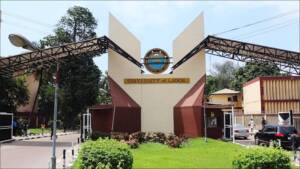
When information broke out last week detailing the huge debt owed by top Nigerian Universities to the different Power generation companies last week; there was of course worries in several quarters.
Not just at the impact of cutting them off from the National grid but the question of what other huge cost they are also grappling with which would further throw the Universities into debt.
Recently, Ahmadu Bello University (ABU) in Zaria expressed outrage over a monthly bill of N300 million, which would result in an annual debt of N3.6 billion to the Kaduna Electricity Distribution Company (KADCO).
The University of Lagos was also revealed last week to be in debt of over N1 Billion to the Eko Electricity Distribution Company (EKEDC).
An estimated N247.7 billion will be spent on power each year for other schools like the University of Nigeria Nsukka (N36.6 billion), University of Calabar (N29.5 billion), ABU (N29.2 billion), Nnamdi Azikiwe University Awka (N26.3 billion), University of Benin (N24.2 billion), University of Ibadan (N23.4 billion), University of Maiduguri (N22.3 billion), University of Port Harcourt (N19.6 billion), University of Lagos (N19.4 billion), and Obafemi Awolowo University, (N17.1 billion) according to a publication by the Electricity Hub.
We thank President Bola Ahmed Tinubu for his prompt response by approving a 50% electricity subsidy to all public hospitals and universities, polytechnic and colleges of education.
However, the truth is that Universities have to plan for a future where ideas, innovation and enterpreneurship will be the cardinal points to keep the Institutions afloat.
It is obvious that Vice Chancellors apparently now engage in financial juggling to allocate or re-allocate scarce dwindling resources to different budget line attempts; a feeble attempt to shave off what is already looking clean shaven.
This financial grooming strategy can be alluded to a Barbers shop where the patrons sometimes allow the creativity of the Barber determine their look. However, in this instance the Barber does not have the tools nor the client any hair left to work with so there is only one option available- the client has to remain clean shaven and bare of any hair despite his desire to appear more masculine!
I had an interesting conversation with a fellow colleague over the plight our Institutions now go through. Sadly, it will continue as the present economic realities have come to stay.
Our Universities must now look in-wards to create opportunities to push for profit, but not at the expense of the quality and standards of research or knowledge they should be known for. Our Universities must now have an Entrepreneurial mindset to create opportunities for profit while promoting shared innovation that will benefit the students, lecturers, the alumni and other stakeholders.
There are too many research documents laying away in dust that can be converted into money making ventures.
The laboratories still have prototypes that can be further worked on to solve the problems of energy or commercialized for profit.
While others see our distinguished Universities as Citadels of learning, I view them as Channels for innovation. Higher educational Institutions comprise the best brains and intellect of any Nation; the time is now to develop a structure and collaborative ecosystem to tap into this resource and harvest valuable insights that will contribute to economic development.
The next steps will require Knowledge partnership, innovative solutions and coordination to address firstly; local challenges and next enable scale up for global innovation.
A Strategy has to be created to enable strong linkages for research to enable technology diffusion. In the United Kingdom; the Universities of Coventry and Suffolk are already re-thinking their model to sustain the depletion of income from foreign students by deploying technology transfer from the university, scaling research into innovation for other markets (government agencies, private businesses) and getting support from Innovate UK to incubate business ideas to go to market which is a very big step forward for sustainability.
Our Higher Institutions must learn from them and others on how to commercialise their research/knowledge so they can hold their head above the ever increasing financial waters before they sink under the weight of not just energy bills but other expenses with the ever reducing drops in revenue!



Excitement as Akwa Ibom people await presidential visitors
By Solomon Essiet Other things being equal, His Excellency, President Bola Ahmed Ti…