

Commission member commends Tinubu, says SEDC will drive South-East growth

Stanley Ihedigbo
A member of the Governing Board of the North East Development Commission (NEDC) and Chairman, Committee on Security, Climate Change and Special Interventions, Hon. Sam Onuigbo, has said that a unified South-East will spur economic growth and development in the region.
Onuigbo, who represented Ikwuano/Umuahia North/Umuahia South Federal Constituency in the House of Representatives from 2015 to 2023, commended President Bola Ahmed Tinubu for the creation of the South East Development Commission (SEDC), describing it as akin to the post-civil war Reconciliation, Rehabilitation and Reconstruction (3Rs) agenda introduced to reintegrate the region after the devastation of the three-year civil war.
The NEDC board member made the remarks in a keynote address delivered at the inaugural stakeholders’ meeting and end-of-year get-together of the Global Igbo Foundation Initiatives (GIFI) held on December 5 in Abuja.
The keynote address, titled “Igbo Yesterday, Today and Tomorrow,” examined the socio-economic development challenges of the Igbo nation while projecting future prospects based on available opportunities and comparative advantages.
Onuigbo described the platform as an idea whose time has come, noting that it was gratifying to see a programme that offers the South-East the opportunity to collectively address its challenges and reposition the region for greatness.
He commended the GIFI Board of Trustees and Executive for organising the event, describing it as timely and significant, given the current state of the nation.
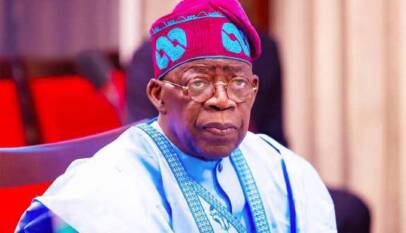
He said: “It gives me great happiness to convey my immense thanks and appreciation to the President and Commander-in-Chief of the Armed Forces of the Federal Republic of Nigeria, Asiwaju Bola Ahmed Tinubu, GCFR, for activating in a special way the vital elements of the three Rs.
“President Tinubu deserves every commendation and appreciation from the Igbo people for the singular gesture of bringing life to the promised 3Rs of Reconciliation, Rehabilitation and Reconstruction.
“The creation of the SEDC stands out as a unique gesture for the effective implementation of the legendary 3Rs. We respectfully appeal to the President that this goodwill be further extended by ensuring the creation of a sixth state in the South-East to eliminate decades of marginalisation rooted in a faulty structural foundation.
“I am happy that the Zonal Coordinator of the Renewed Hope Agenda, His Excellency, former Senate President Anyim Pius Anyim, who is also the Grand Patron of the GIFI Board of Trustees, will relay our appreciation to Mr President.”
Onuigbo also described the presence and association of Dr. Okwesilieze Nwodo, Chairman of the GIFI Board of Trustees, as reassuring and exceptional.
He noted that the history of the Igbo nation reflects a delayed encounter with the West, attempted suppression, and eventual transformation into progress and unstoppable resurgence.
According to him, the Igbo story is “a chronicle of adversity continually transformed into innovation, mobility, enterprise and global distinction.”
“To trace the trajectory of the Igbo—yesterday, today and tomorrow—is to encounter a people shaped by geography and history, yet never defined or constrained by them. No account of this story is complete without acknowledging their relatively late embrace of Western civilisation through education.
“Yet, the Igbo also drew strength from their traditional communal socio-economic and political institutions, including the village assembly, the all-in-all model of collective decision-making, and the guiding philosophy of Onye aghala nwanne ya—‘let no one abandon his brother.’
“Through these systems, remarkable progress was achieved. The Igbo embody a profound unity in diversity. Their social organisation reflects long-standing democratic principles expressed through village democracy, councils of elders, age-grade systems, women’s councils and titled societies.
“These structures reveal a deep-rooted culture of participatory governance. The flame of Igbo ingenuity—whether in education, commerce, industry or enterprise—did not first shine abroad; it radiated from home, supported by age groups, women’s associations and communal networks.”
He further posed reflective questions about Igbo identity, history, and destiny, noting that these are not merely academic inquiries but questions of survival, dignity, power, and purpose.
“The Igbo are not just an ethnic group; they are a civilisation—a decentralised, republican, entrepreneurial, migratory and innovative people whose history reflects delayed contact with Western education but accelerated excellence; suppression but resurgence,” he said.
He added that modern scholars acknowledge Igbo diversity as a reflection of a complex, decentralised civilisation comparable to the ancient Greek city-states, drawing from post-colonial studies by Onyewuenyi (1993), Afigbo (1981), Isichei (1976), Kalu (1998), and Nwoga (1984).
According to him, the Igbo are an ethnocultural and linguistic civilisation originating from south-eastern Nigeria, characterised by a decentralised republican political structure, a dynamic entrepreneurial spirit, and a communal moral system anchored on justice and equity (ọfọ na ogu).

Medical brain drain: Tinubu calls for sustainable solutions across West Africa
Stanley Ihedigbo President Bola Ahmed Tinubu has urged medical professionals across…