

CGE Africa tasks media to step up reports on women, girls’ rights issues

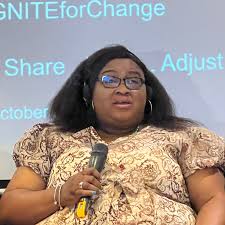
Stanley Ihedigbo
Center for Gender Economics Initiative (CGE Africa) , has joined global voices tasking the Nigeria media to step up reports that advance the rights of women and the girl child.
Speaking at a media engagement to mark this year International Women’s Day, tagged : ‘Gender and age responsive media reporting in the digital era ‘, the Executive Director of the organization, Ms. Uchenna Idoko, said equality of people, regardless age, ethnicity, gender, religion, economic status, has become a critical agenda of this age.
“The media should give increasing attention to gender equality and age-related issues in Nigeria. The press has the influential power to challenge and change people’s perceptions and behaviour and impact policy and practice dialogues. The need to address the continuous negative and degrading
images of women protected through media content, including advertisements, especially in the digital space. We call for action to intensity the media’s role in balancing unequal gender relations and promoting gender equality and older women’s empowerment.
“Research and international reports have confirmed that women are disadvantaged in many social aspects. Though the degrees may vary, they are oppressed all over the country. They control only a tiny percentage of Nigeria’s resources, have limited access to education and employment, and remain marginalised and excluded.
Their family duties affect their careers in the public domain, and their unequal relations with men make them vulnerable to Gender-Based Violence (GBV).
She explained that the older women are especially vulnerable to abuse and violence because of discriminatory societal attitudes and the non-realization of human rights.
“This is often exacerbated by
poverty and lack of access to legal protection. In some parts of Nigeria, harmful traditional practices result in the abuse and violence of older women. Gender equality and older citizens’ empowerment should be one of the overarching priorities
of the Federal Republic of Nigeria.
“Media actors should clearly understand that gender is the first step in gender-sensitive reporting and media representation of gender in general. It is essential to understand that, unlike sex, gender is a sexual construction. Therefore,
news and all media content must be mindful not to present gender inequality as natural and inherent.
“After clearly understanding gender as a social construct, recognising the equality of the sexes is an essential step that should affect all outputs of media content. By
recognising gender equality, our stories and all media texts will become more gender-sensitive and impartial. This will contribute to breaking stereotypes and
demystifying wrong cultural and social assumptions,” Ms. Idoko.
The group Executive Director explained further that women’s rights are human rights.
“Although human rights law are designed to protect all humans and presume that all humans are equal regardless of their age, race, sexuality, gender, ethnicity and other identities, women have been marginalised socially and historically due to the failure of most civilizations to see women as whole human but rather as subordinates to men. This brings the importance of putting extra
effort and focus on women’s rights and applying human rights by the media.
“Thus, as language carries element that validates the essentialization of gender and perpetuate gender inequality, the language we use must be crafted to promote gender sensitivity, age sensitivity, and equality. Report gender-based violence ethically- one if the challenges of tackling GBV in
Nigeria is that it tends to be considered a personal issue that is not meant to be discussed in public. However, provided that GBV is a result of gender inequality it is
vital that the media plays its role in bringing to the public’s attention and seek for political solutions.
“The media should make a deliberate effort to make women a source of news, featuring women professionals in hard news, topics, and shows, is among the rule of
thumb to change women’s narratives in media. Mainstream gender issues. All topics and social issues in the media must be analysed and seen through the gender lens,” she stressed.
Ms. Idoko further said: ” Avoid objectifying and stereotypical representation of women in visual images and sound effects. Look beyond gender inclusivity- Aside from gender-based discrimination in the media, it must also be noted that discrimination becomes adverse as we go across different social groups and dwelling areas, such as women from other religions, women of different social status, and rural women.
“These include older women and
women living with disabilities; the lack if representation and misrepresentation of older women in media reproduces their oppressive realities. Women and the media are among the 12 critical Beijing platforms for Action areas. The media has been recognised as having an influential power to challenge and change people’s
perceptions and behaviour and impact dialogue.
“The Beijing Action plan also underlined the need to address the continuous negative and degrading images of women projected through
media content, including advertisements. It called for an action to intensity the media’s role in balancing unequal gender relations and promoting gender equality. The time to act is now”, she stated.


Awujale stool: Fusengbuwa challenges Ogun govt’s suspension of selection process
Jeremiah Adeshina The struggle over the vacant stool of the Awujale a…
