
WAASA, Jubaili Agrotec take farm support to grassroots, launch village Agro Store Model


Michael Olamide Alabi
Women in Agricultural Sustainability and Advancement Africa (WAASA), in partnership with Jubaili Agrotec, has launched a grassroots agricultural support initiative aimed at helping rural farmers reduce production costs, improve yields and strengthen food security.
The initiative was unveiled during a farmers’ capacity-building and agricultural training programme held in Ajebo, Ogun State, over the weekend.
The programme focused on equipping farmers with practical knowledge on crop production, including the appropriate use of herbicides, pesticides and fungicides, improved seed varieties, planting techniques, seasonal considerations and effective crop management.
The partnership is also designed to provide farmers with improved access to quality agricultural inputs at affordable prices.
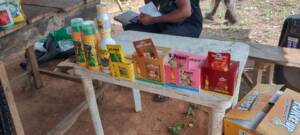
However, beyond the training, WAASA plans to establish a Village Agro Store in every participating community as it expands the intervention to other farming communities.
According to the organisation, the community-based agro stores will serve as accessible outlets where farmers can obtain approved crop protection products, improved seeds and other essential farm inputs at discounted prices.
The model is expected to reduce the challenges associated with farmers travelling long distances to purchase inputs, while helping to minimise transportation costs and improve access to genuine agricultural products.
The initiative will also provide opportunities for farmers to receive guidance on the selection and responsible application of agricultural inputs, including dosage, timing and safety precautions.
Reducing production costs
WAASA said the initiative was conceived in recognition of the challenges confronting smallholder farmers, particularly limited access to affordable inputs, modern agricultural information and extension support.
The organisation believes that making quality inputs available closer to farming communities could help farmers reduce production expenses, improve profitability and contribute to more affordable food production.
It also expects the training component to improve farmers’ understanding of improved seeds, planting methods, crop protection and other farm management practices capable of increasing productivity.
The programme further seeks to promote responsible use of agrochemicals by educating farmers on appropriate application rates, timing, protective measures and environmental considerations.
Strengthening rural agriculture
WAASA said the Village Agro Store model would form part of a continuous community-based agricultural development system rather than a one-off intervention.
Speaking on the initiative, the Founder and President of WAASA, Ms. Chi Tola Roberts, stressed the need for agricultural development programmes to remain close to the communities where food is produced.
According to her, farmers should have continuous access to relevant agricultural information, quality inputs and technical support instead of depending solely on occasional government or development interventions.
The organisation said its model would combine periodic technical training with accessible input distribution to support farmers throughout their production cycles.
It added that the partnership with Jubaili Agrotec demonstrates the importance of collaboration between development organisations and private-sector agricultural businesses in addressing challenges confronting the agricultural sector.
Focus on Food Security, Women and Youth
The initiative is also expected to contribute to food security by supporting improved farm productivity, reducing avoidable crop losses and strengthening the capacity of farming households.
WAASA said it would encourage greater participation of women and young people in agriculture by taking knowledge, resources and economic opportunities directly to rural communities.
The organisation also identified climate resilience as an important component of its farmer education programme, particularly through improved seed varieties, better crop management and farming practices adapted to changing weather conditions.
Call for partnerships
WAASA called on state and local governments, agricultural companies, financial institutions, development organisations, corporate bodies, seed producers and other stakeholders to support the expansion of the initiative.
The organisation said agricultural companies could participate through product support, technical demonstrations and farmer education, while government authorities could assist by identifying farming communities and mobilising farmers.
WAASA said the Ajebo training represents the beginning of a broader community-based agricultural development programme: it hopes to expand across Nigeria.
The organisation maintained that farmers require more than encouragement to produce food, stressing that they also need the knowledge, quality inputs, technology and support systems necessary to farm efficiently, profitably and sustainably.




First Patriot targets ₦55m annual savings with JMG Hybrid Solar system
Michael Olumide Alabi First Patriot Limited, a mining and mineral pro…