
EFCC, Police, NFIU mobilise stakeholders against illicit financial flows

Stanley Ihedigbo
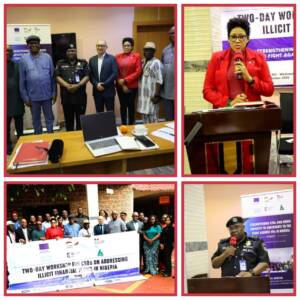
Economic and Financial Crimes Commission (EFCC), Nigeria Police Force and other stakeholders have called for stronger collaboration among law enforcement agencies, government institutions, civil society organisations (CSOs) and the media to combat illicit financial flows (IFFs) in Nigeria.
The call was made in Uyo, Akwa Ibom State, during a two-day workshop organised by the Africa Network for Environment and Economic Justice (ANEEJ) under its SecFin Africa Project.
The workshop, themed “Strengthening CSOs and Media Capacity to Contribute to the Fight against Illicit Financial Flows (IFFs) in Nigeria,” brought together participants from various CSOs.
The Executive Chairman of the EFCC, Mr Ola Olukoyede, urged CSOs across the country to redouble their efforts in supporting the Commission’s campaign against illicit financial flows.
Olukoyede, who spoke through the Head of the Public Affairs Department, ACE II TE Nwosu, said IFFs have damaging consequences for Nigeria, as they hinder development, erode public trust and undermine good governance.
He identified advocacy, investigative reporting and public awareness as some of the areas where CSOs could make meaningful contributions to the fight against financial crimes.
The EFCC chairman assured participants that the Commission remained committed to its mandate of investigating, preventing and prosecuting financial crimes.
He urged CSOs to continue raising public awareness, promoting transparency and strengthening the integrity of Nigeria’s financial system for sustainable national development.
Earlier, the Executive Director of ANEEJ, Rev. David Ugolor, said illicit financial flows constituted a serious threat to Nigeria’s economic stability and development.
Ugolor identified corruption, money laundering, procurement fraud, tax evasion, trade mis-invoicing and profit shifting among practices that contribute to IFFs.
He called for stronger cooperation between government institutions, security agencies and CSOs to promote transparency and accountability.
Also speaking, the Akwa Ibom State Commissioner of Police, CP Baba Mohammed Azare, explained the nature of illicit financial flows and their implications for economic and social development.
Azare said IFFs involved monies or assets that were illegally acquired, transferred, concealed or utilised, adding that they could arise from corruption, fraud, organised crime, tax-related abuses, smuggling, trafficking, cybercrime and money laundering.
He noted that the consequences were far-reaching because resources lost through such activities could otherwise be used to provide schools, hospitals and other developmental projects.
The police commissioner also provided participants with guidance on identifying and preventing financial crimes and made recommendations on tackling the menace.
In a presentation titled “Understanding illicit financial flows in Nigeria: Concepts, typologies and development impact,” the SecFin Africa Project Representative, Prof. Abdullahi Shehu, examined the nature, sources and different typologies of illicit financial flows.
Shehu stressed that IFFs were not only about the loss of money but also the loss of opportunities and resources that could contribute to national development.
Similarly, the Head of the Legal Operations Division of the Nigeria Financial Intelligence Unit (NFIU), Chinedum Odenyi, explained the functions and key mandate of the agency, including its role in providing financial intelligence and combating money laundering and other financial crimes.
The workshop underscored the need for sustained collaboration among relevant institutions, CSOs and the media in preventing illicit financial flows and strengthening transparency and accountability in Nigeria.

El Niño is coming: Is Nigeria prepared, or are we too distracted to notice?
As climate risks intensify, Nigeria must look beyond politics and begin asking diff…