

Nigeria’s economic reform: Subsidy removal, pain, path forward

PointBlank with Smart Emmanuel
09066642354
On May 29, 2023, President Bola Ahmed Tinubu stood on the podium at Eagle Square and said eight words that changed Nigeria’s economy overnight: “Fuel subsidy is gone.”
Those five seconds ended a 40-year policy that had cost Nigeria an estimated ₦17 trillion between 2005 and 2023, according to the Nigeria Extractive Industries Transparency Initiative (NEITI) reports. It also triggered the most aggressive economic reform Nigeria has seen in a generation.
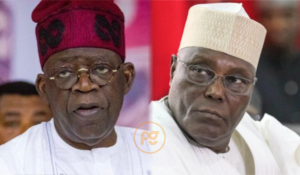
Recently, former Vice President Atiku Abubakar suggested “targeted subsidies” or “discounted crude to local refineries.” But before we rush to reintroduce a subsidy in another form, we must ask: What exactly did we remove? Why did we remove it? What has happened since? And where do we go from here?
A fuel subsidy means the government pays part of the cost so that citizens can buy petrol below the market price.
For decades, the Nigerian National Petroleum Company (NNPC) imported petrol and sold it to marketers at a “landing cost,” while the government paid the difference.
That difference exploded because of three major factors: foreign exchange, smuggling, and fraud.
Foreign exchange: As the naira weakened, the dollar cost of importing fuel rose.
Smuggling: Subsidised petrol, which was sold at about ₦185 per litre, was being trucked to Benin, Togo, Cameroon and other neighbouring countries, where it could sell for ₦800 or more per litre.
Fraud: No one could accurately audit how many litres of petrol Nigeria consumes daily. Reported figures jumped from 35 million litres per day in 2017 to 66 million litres per day in 2022.
In 2022 alone, subsidies gulped ₦4.39 trillion. In Q1 2023, it was ₦1.27 trillion. For context, the ₦4.39 trillion spent on subsidy was more than the entire 2022 budgetary allocations for Education (₦1.08 trillion), Health (₦1.17 trillion), and Defence (₦1.35 trillion) combined.
Worse still, 80% of the benefit went to the top 40% of earners who owned cars, generators, and businesses, while the poorest 40% received less than 3% of the benefit, according to the World Bank’s 2023 Nigeria Public Finance Review.
In effect, we were borrowing to subsidise the rich.
By 2023, subsidy spending was equivalent to 100% of what the government borrowed. We were in a debt trap. That is why subsidy removal was not simply a choice; it was an emergency surgery.
The Tinubu reforms
Coming to the Tinubu reforms, subsidy removal was just one half of the equation. The other half was foreign exchange unification.
Before June 2023, Nigeria had multiple exchange rates: the CBN official rate was around ₦460/$, the Investors’ and Exporters’ (I&E) window was around ₦600/$, while the parallel market traded at about ₦750/$. This created massive arbitrage opportunities.
On June 14, 2023, the CBN collapsed the multiple exchange-rate windows into one. The naira moved from about ₦460 to ₦780/$ and, as of August 2026, trades around ₦1,550–₦1,600/$.
Other reforms include tax reforms, aimed at increasing the tax-to-GDP ratio from 10.8% to 18% by 2026 through harmonisation and technology.
The second area was the infrastructure push, including the student loan programme, CNG buses, and the Renewed Hope Housing Programme.
The third was the refinery restart programme. The Dangote Refinery, with a capacity of 650,000 barrels per day, began operations in January 2024, while the Port Harcourt, Warri, and Kaduna refineries are being revamped.
The goal was clear: stop borrowing to consume and start earning to invest.
Let’s just be honest: the pain was immediate.
Inflation rose from 22.41% in May 2023 to a peak of 34.19% in June 2024 before easing to 22.22% in June 2026, according to the National Bureau of Statistics (NBS). Food inflation also rose above 40%.
Petrol prices rose from ₦185 per litre to about ₦540 per litre in June 2023. Today, prices average between ₦950 and ₦1,100 per litre, depending on location and whether the product is sourced from the Dangote Refinery or imported.
The cost of living became a nightmare. Transport, food, and electricity costs all spiked because diesel and petrol drive logistics and power generation.
However, beyond all this suffering, FAAC allocations to states have increased significantly.
In 2022, total FAAC allocation was ₦10.49 trillion. In 2024, it was ₦15.26 trillion. States received 62% more in 2024 than in 2023. Lagos received ₦531 billion, Rivers ₦349 billion, and Kano ₦257 billion.
Then there is debt servicing. In H1 2024, debt service fell to 45% of revenue, compared with 97% in 2022. This means more money is potentially available for capital projects.
Following FX unification, foreign investment also increased. Q1 2024 recorded $3.67 billion in capital importation, the highest level since 2022.
Then, for the first time, Nigeria began exporting refined petroleum products. The Dangote Refinery is producing at significant levels and has reduced the country’s dependence on imported petrol.
The logic was simple: short-term pain for long-term gain.
The question now is: Are we converting these gains into improved welfare for the people?
The argument for discounted crude
The argument for selling crude to local refineries at a discount, as suggested by Atiku Abubakar, sounds attractive.
“Let Dangote and other local refineries buy Nigeria’s crude in naira at below-market prices so that petrol becomes cheaper.”
But economically, this is still a subsidy.
If Bonny Light crude is selling for $80 per barrel on the world market and the Nigerian government sells it to Dangote at $60, the Nigerian state loses $20 per barrel. That $20 is foregone revenue. That is a subsidy.
There are three major problems with this model.
First, it does not guarantee cheap petrol.
Petrol prices are determined by several factors: crude oil cost + refining cost + foreign exchange + distribution + margins.
Even with cheap crude, if the exchange rate is ₦1,600/$ and diesel costs remain high for generators and logistics, petrol prices may not fall proportionally.
Secondly, it recreates distortions.
Who decides which refinery gets cheap crude? At what price? Such a system could open the door to lobbying, arbitrage, and round-tripping—the same cancer that helped undermine the old subsidy regime.
Finally, it hurts government revenue.
We need revenue from crude oil sales to fund the national budget. Selling crude below market value means the government may have to borrow more to make up the difference.
Subsidising crude supplied to local refineries may be different in structure, but economically, it is still a subsidy.
The real solution
The real solution is to improve the reform, not reverse it.
Subsidy removal without protection is cruel. Subsidy without reform is suicide. The middle ground is targeted support and increased productivity.
Since states now receive more money, they must put the additional FAAC revenue to productive use.
The Federal Government has rolled out a ₦100 billion CNG bus programme, a ₦125 billion conditional cash transfer programme, and student loans. However, the impact is still slow.
Governors must invest their FAAC windfalls in mass transit to reduce transportation costs, primary healthcare and public schools, and agriculture to fight food inflation, especially in states known for food production.
If people see better roads, cheaper buses, functional hospitals, and improved public services, they will be more willing to endure the temporary pain of reform.
Complete the energy reform
With the completion of the energy reform, cheaper and more reliable energy is one of the most important ways to reduce inflation.
We must ramp up the Dangote and NNPC refineries towards full capacity to reduce dependence on imported petroleum products.
We must also roll out CNG conversion for millions of vehicles to reduce transportation costs.
And we must fix the power sector.
Band A electricity tariff reforms must be matched with an actual and reliable power supply of up to 20 hours daily, as promised.
Fight inefficiency and leakages
The old subsidy system died because of leakages.
Any new “discount” or intervention must be digital, transparent, and independently audited by NEITI and civil society organisations.
No more cabals.
Stabilize the macroeconomy
Nigeria must also stabilise the macroeconomy by keeping the FX market unified, reducing excessive borrowing, and attracting investment into manufacturing.
When we produce more goods locally, create jobs, and reduce dependence on imports, prices can eventually fall naturally.
Conclusion
In conclusion, Nigeria finally took the difficult decision to remove fuel subsidy in 2023. To reverse it now could mean returning to the practice of borrowing trillions of naira annually to fund consumption.
Yes, the reform has imperfections.
Inflation is still high. Wages have not fully caught up. State governors are not spending the additional FAAC revenue effectively enough. But the answer is not to return to the old subsidy regime.
The answer is to improve the reform.
I still maintain my stand: “If the reform has some imperfections, it should be improved, not reversed.”
Subsidy in any form is like a drug. It may feel good at first, but it can kill you slowly.
What Nigeria needs now is not painkillers. We need surgery, physiotherapy, and food.
That is economic reform.
And we must see it through.
Yagazie!!!


APC Campaign Council denies plot to assassinate Atiku, challenges Timi Frank
Stanley Ihedigbo All Progressives Congress (APC) Presidential Campaign Counc…
