

Government can’t do it alone, LUTH tells private sector, as Deekay, Aksara Foundation donate equipment
Intervention targets resident doctors’ welfare, working conditions in ARD call duty rooms

Mercy Iheoma Ihedigbo
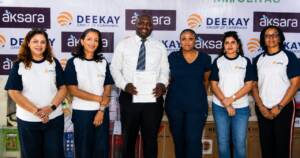
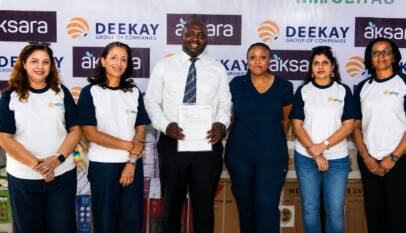
Deekay Group of Companies, in partnership with the Aksara Foundation, has intensified its corporate social responsibility (CSR) intervention in the public sector with the donation of essential electrical appliances, home equipment and educational materials to the Association of Resident Doctors (ARD) of the Lagos University Teaching Hospital (LUTH), Lagos.
The intervention, which included tubular batteries, inverter equipment, a television set, a refrigerator and educational essentials, was targeted at improving the welfare and working environment of resident doctors who spend long hours attending to patients and responding to emergencies at the tertiary health institution.
The donation is part of Deekay Group’s longstanding CSR programme, which the company said is designed to identify specific needs in communities and public institutions, provide targeted assistance and monitor the impact of its interventions.
Speaking during the presentation, a representative of Deekay Group of Companies, Ejiofor Doris, said the company’s CSR philosophy was driven by the need to move beyond conventional donations by identifying genuine needs and ensuring that interventions produced meaningful and sustainable benefits.
According to her, the company adopts a three-stage approach to its CSR activities: identifying areas of need, providing appropriate support and monitoring the impact of the intervention.
“We assess, then we donate, and then we monitor,” she said.
Ejiofor explained that the monitoring component remained critical because the company wanted to ensure that resources committed to CSR projects were properly utilised and that beneficiaries continued to derive value from the interventions.
She said the company’s approach was based on the understanding that corporate social responsibility should not simply be about making donations, but should address identifiable challenges and contribute to improving the lives of beneficiaries.
Established in 1972, Deekay Group, she noted, had maintained its CSR activities for several years, stressing that the company’s commitment to social investment predated her involvement with the organisation.
She disclosed that the company had supported different sectors over the years, particularly healthcare, education and community development.
According to her, Deekay Group had previously supported government-owned schools through the provision of computers and other learning materials, while scholarships had also been awarded to students from disadvantaged backgrounds.
The company, she added, had also extended its interventions to vulnerable groups, communities where it operates and community policing initiatives.
Although she did not disclose the cumulative value of the company’s CSR investments, Ejiofor said millions of naira had been committed to various interventions over the years.
She explained that the company was encouraged by the outcomes of its CSR initiatives, particularly instances where beneficiaries were able to improve their circumstances as a result of the support received.
She cited students who had benefited from the company’s scholarship programmes and subsequently recorded strong academic performances as evidence that sustained corporate support could have a significant impact on individuals and communities.
LUTH intervention
On the donation to LUTH, Ejiofor said the initiative was significant because it represented the company’s first CSR intervention specifically targeted at a medical team.
She expressed the company’s intention to sustain its engagement with the healthcare sector, noting that healthcare workers require an enabling environment to effectively discharge their responsibilities.
The donated appliances and electrical equipment are expected to provide basic conveniences in the call duty rooms used by resident doctors.
Resident doctors frequently remain within the hospital for extended periods while attending to patients, handling emergencies and providing round-the-clock medical services.
The intervention is therefore expected to provide some relief for doctors who spend long hours on duty and often have limited opportunity to leave the hospital premises during their shifts.
The provision of inverter equipment and batteries is also expected to help address basic power-related challenges in the call duty rooms, while the refrigerator and television are intended to improve the general welfare and convenience of medical personnel using the facilities.
‘Government cannot meet all needs alone’
Also speaking on behalf of LUTH, the Chairman, Medical Advisory Committee of the hospital, Prof. Oluwole Ayodeji, commended Deekay Group and the Aksara Foundation for supporting the institution.
Ayodeji stressed that government alone could not meet all the needs of public healthcare institutions, noting that contributions from the private sector, religious organisations, non-governmental organisations, individuals and other stakeholders had remained important to the development of LUTH.
He said partnerships of this nature could help public institutions address specific gaps while enabling them to concentrate available government resources on other critical areas.
The professor described the donation as particularly relevant because the equipment would be used in call duty rooms where resident doctors spend considerable periods working and responding to patients’ needs.
He said creating a more comfortable working environment for healthcare professionals could contribute positively to their morale and productivity.
“Motivation is a good thing. Motivation can be financial; it can be welfare. This is welfare,” he said.
Ayodeji explained that the appliances would provide doctors on call with basic conveniences, including the ability to warm their meals and make use of other facilities while continuing with their responsibilities.
He noted that healthcare workers often operate under demanding conditions and therefore require adequate welfare support to maintain their effectiveness.
Philanthropy and healthcare development
The LUTH official also highlighted the broader role philanthropy and private-sector partnerships have played in the development of specialised healthcare facilities at the hospital.
He recalled instances in which donations from individuals and organisations had contributed to the development of important medical infrastructure.
According to him, one such intervention contributed to the establishment of a renal facility with 32 dialysis beds, which he described as the highest number of dialysis beds in the country.
He used the example to demonstrate how strategic support from non-governmental and private-sector stakeholders could go beyond short-term assistance and contribute to the development of infrastructure capable of serving patients for many years.
Ayodeji urged Deekay Group and the Aksara Foundation to sustain their partnership with LUTH, stressing that the hospital remained open to collaborations that could contribute to improved healthcare delivery.
He said the institution valued not only material donations but also partnerships and the exchange of ideas capable of generating innovative solutions to challenges confronting the healthcare system.
“We appreciate every little token. It’s not only about giving; it’s about sharing ideas,” he said.
He assured the donors that the hospital would ensure that the donated items were properly utilised for their intended purposes.
Bridging the public-sector gap
The intervention comes against the backdrop of increasing calls for stronger collaboration between the government and the private sector in addressing challenges confronting public institutions.
Public hospitals, schools and other government-owned institutions often operate under significant resource constraints, making partnerships with businesses, foundations, faith-based organisations, NGOs and individuals an important component of social development.
For Deekay Group and the Aksara Foundation, the LUTH initiative represents an attempt to direct CSR resources towards a specific and identifiable need rather than adopting a broad, one-off approach to philanthropy.
The emphasis on assessment, intervention and monitoring also reflects a growing trend towards impact-driven CSR, where companies increasingly seek to measure the practical outcomes of their social investments.
In the healthcare sector, such interventions can have implications beyond the immediate beneficiaries. Improving the welfare of resident doctors, for instance, can contribute to a more conducive working environment for medical professionals who provide essential services to patients, particularly during emergencies and after regular working hours.
For LUTH, the donation represents another contribution towards improving the welfare and working conditions of resident doctors.
For Deekay Group and the Aksara Foundation, it reinforces their stated commitment to using corporate social responsibility as a tool for supporting public institutions, vulnerable groups and communities.
The partnership also underscores the importance of sustained private-sector participation in social development, particularly in areas where government resources alone may not be sufficient to meet growing public needs.
As businesses increasingly look beyond profit-making to their broader responsibilities to society, interventions that identify specific needs, provide appropriate solutions and monitor outcomes could help redefine the meaning of CSR in Nigeria.
The LUTH donation, therefore, goes beyond the provision of appliances and educational materials. It represents a modest but targeted effort to improve the working environment of healthcare professionals while strengthening the relationship between private-sector organisations and public institutions.



Globacom’s Engr. Olabode, Kings Care Foundation President, Atu to chair Dr Paul Egbo’s book launch
Stanley Ihedigbo Head, ROW and Operations, Technical Fiber at Globacom, Engr…