

History vindicating Ortom as FG moves to end open grazing

Henry Iyorkase, Makurdi
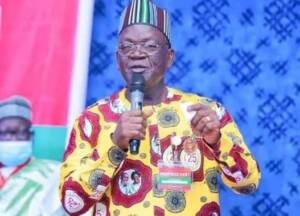
Federal Government’s renewed push to replace open grazing with modern ranching has been described as a major vindication of the former Governor of Benue State, Chief Samuel Ortom, who years ago championed ranching as the sustainable solution to Nigeria’s recurring farmer-herder conflicts.
Ortom, who governed Benue State from 2015 to 2023, had maintained that open grazing was no longer compatible with Nigeria’s growing population, expanding agricultural activities and increasing competition over land.
His position, which attracted strong opposition and subjected his administration to intense political pressure, was eventually backed by legislation in Benue State.
In 2017, the Ortom administration enacted the Open Grazing Prohibition and Ranches Establishment Law, making Benue one of the first states to establish a comprehensive legal framework for ending open grazing and promoting ranching.
Years later, the Federal Government is now acknowledging many of the same realities that informed the former governor’s position.
The Federal Government has said open grazing has become unsustainable because of disappearing grazing routes, population growth and increasing pressure on available land. It has also announced plans to establish modern ranching settlements in areas identified as farmer-herder conflict flashpoints.
The development has therefore raised a significant question: Was Ortom wrong at the time, or was he simply ahead of his time?
Ortom’s advocacy for ranching was not limited to political speeches.
His administration translated the policy into legislation despite the controversy surrounding the issue.
The Open Grazing Prohibition and Ranches Establishment Law was presented as an attempt to bring order to livestock production, protect agricultural land and reduce clashes between farmers and herders.
The former governor consistently argued that the law was not targeted at any ethnic group.
According to his position, anyone—whether Hausa, Fulani, Tiv, Idoma, Igbo, Yoruba or from any other community—could engage in livestock production in Benue, provided such activities complied with the state’s law.
His central argument was that ranching was not anti-Fulani but a modern approach to livestock production capable of protecting farmers, herders and the wider economy.
However, the policy generated fierce opposition.
Ortom and his administration faced pressure from groups representing herders and other interests opposed to the prohibition of open grazing.
Yet the former governor refused to abandon the policy.
His administration maintained that Benue, like every other state, had the constitutional and legislative responsibility to regulate activities affecting land, agriculture and security within its territory.
The former governor’s position eventually became closely associated with his political identity.
Ortom repeatedly acknowledged that his stand against open grazing could carry significant political consequences.
At different times, he declared that he was prepared to pay the political price for defending the interests of Benue communities and protecting the state’s agricultural land.
He eventually lost his bid for the Benue North-West Senatorial seat in the 2023 general election.
While the outcome of that election has generated different political interpretations, supporters of the former governor point to it as evidence of the political risks associated with his position on the grazing crisis.
For them, the significance of the Federal Government’s current ranching policy lies in the fact that the position for which Ortom was heavily criticised is gradually becoming part of the national policy conversation.
The political irony is difficult to ignore.
At the height of the farmer-herder crisis, ranching was presented by some of Ortom’s critics as an unnecessarily confrontational policy.
Today, the Federal Government is increasingly presenting ranching as a practical response to the challenges associated with open grazing.
The circumstances have also changed significantly.
Nigeria’s population continues to grow, agricultural land is under increasing pressure, traditional grazing routes are disappearing, and conflicts between farming communities and pastoralists have continued to threaten livelihoods and food production in several parts of the country.
Against this background, the transition from uncontrolled movement of livestock to organised ranching is increasingly being viewed as a structural solution rather than merely a political slogan.
This is the basis of the argument that Ortom’s position has received a measure of national validation.
What was once regarded by some as a controversial state policy is now being discussed as part of a broader national strategy for modernising livestock production.
The former governor’s supporters insist that his position was never fundamentally about ethnicity.
Rather, they argue, it was about changing an agricultural system that had become a source of persistent conflict.
Ranching, they contend, provides a more organised system in which livestock can be managed, fed, vaccinated and monitored without allowing animals to destroy farmers’ crops.
It can also create opportunities for investment in animal husbandry, meat production, dairy development, veterinary services and related agricultural industries.
From this perspective, ranching is not simply a security policy but an economic modernisation strategy.
It is also an approach that can potentially provide greater certainty for both farmers and livestock owners.
Ortom’s campaign against insecurity was not limited to the question of grazing.
Throughout his tenure, he repeatedly called for security agencies to investigate attacks on farming communities and prosecute individuals or organisations found responsible for violence.
He also demanded accountability from those accused of supporting, encouraging or justifying attacks.
Those demands were often viewed through a political lens.
However, the broader question of accountability for violent actors has continued to attract international attention.
On February 10, 2026, members of the United States House of Representatives introduced the Nigeria Religious Freedom and Accountability Act of 2026.
Among other provisions, the proposed legislation calls for consideration of targeted sanctions against individuals and entities accused of severe religious-freedom violations and specifically references Miyetti Allah Cattle Breeders Association of Nigeria and Miyetti Allah Kautal Hore. It also proposes consideration of whether certain Fulani-ethnic militias should qualify for designation as foreign terrorist organisations.
The bill is a legislative proposal and has not, by itself, established those allegations as facts or become United States law.
Nevertheless, its introduction demonstrates that concerns about violence, accountability and the protection of vulnerable communities have extended beyond Nigeria’s domestic political debate.
For Ortom’s supporters, it reinforces the argument that the issues he repeatedly raised were not merely political talking points.
The latest Federal Government position has also renewed debate about the direction of livestock policy in Benue State.
The state already has a legal framework prohibiting open grazing and promoting ranching.
Consequently, the key issue is whether the current administration will strengthen the existing framework, amend it or pursue a different approach.
Questions are being raised about the enforcement of the Open Grazing Prohibition and Ranches Establishment Law, the effectiveness of the Livestock Guards and the measures being taken to protect farmers and livestock owners.
The debate is particularly significant because Benue remains heavily dependent on agriculture.
For many communities, access to farmland is directly connected to household income, food production and economic survival.
At the same time, livestock production remains an important component of Nigeria’s agricultural economy, making a sustainable framework that protects both farmers and herders essential.
The solution, therefore, cannot simply be the movement of people and animals from one location to another.
It requires a system that establishes clear rules, protects property rights, guarantees security and creates viable economic opportunities for livestock producers.
With the Federal Government now moving towards modern ranching, supporters of the former governor argue that Benue should not abandon the policy framework that made it a pioneer in the movement away from open grazing.
Instead, they want the state government to strengthen implementation, improve enforcement and work with livestock owners to develop viable ranching arrangements.
They argue that the existence of a law is not enough.
Effective implementation, investment, stakeholder engagement and security are required to make ranching work.
The Federal Government’s new position could therefore provide an opportunity for greater cooperation between Abuja and states that have already enacted ranching or anti-open-grazing legislation.
Such cooperation could include funding for ranch development, veterinary infrastructure, livestock markets, water systems, feed production and security.
Samuel Ortom’s political journey on the ranching question illustrates the difficulty of taking unpopular positions on issues involving land, ethnicity, agriculture and security.
When he championed the prohibition of open grazing, he faced fierce criticism and considerable political pressure.
He nevertheless maintained that Nigeria needed to move from traditional open grazing towards organised livestock production.
Today, the Federal Government is increasingly advancing the same broad principle.
Open grazing is being described as unsustainable.
Ranching is being promoted as a modern alternative.
The pressure on land is being acknowledged.
Farmer-herder conflicts remain a national security and agricultural concern.
And the need to modernise Nigeria’s livestock sector is increasingly recognised.
For Ortom’s supporters, these developments amount to vindication.
The former governor may have been politically controversial, but on the question of ranching, they argue, he identified the direction in which Nigeria would eventually have to move.
The debate over the legacy of his administration will undoubtedly continue.
But one thing is increasingly clear: the national conversation on livestock production is moving closer to the position Ortom took years ago.
History, as they say, may take its time. But when tomorrow finally arrives, it often remind those who saw it coming.





Bravest lesson of all: From caves of Okinawa to frontlines of Nigerian classrooms
By Asiwaju Kunle Kalejaye SAN In June 1945, in Okinawa, a 22-year-old teache…