

Over 100 Bishops elevated without due process, cleric alleges, calls for constitutional review

Tony Okoh, Uyo
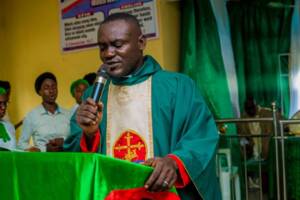
A senior clergy of the African Church in Akwa Ibom State, Venerable Richard Peters, has called on the factional Primate of the Church, Rt. Rev’d Julius Osayande Olayinka Abbe, to step aside and reverse what he described as numerous irregular elevations and consecrations carried out under his leadership.
Peters warned that failure to address the alleged constitutional breaches could expose the Church to a wave of litigation, deepen internal divisions, and trigger widespread rebellion among members and clergy who feel sidelined by the current leadership structure.
Speaking through a press statement made available to journalists in Uyo on Thursday, the cleric urged the Church leadership to either reverse the controversial promotions or extend similar opportunities to all qualified persons who have been denied advancement despite meeting established requirements.
According to him, the African Church cannot continue to function effectively where constitutional provisions are treated as optional and established ecclesiastical procedures are routinely disregarded.
“Anything short of this leaves the Church open to litigation and internal rebellion. The African Church cannot survive as a body where rules are optional and ecclesiastical order is ridiculed,” he stated.
He added that the Church risks losing the discipline, respect, and spiritual authority that had made it one of the most influential Christian institutions in Nigeria if the current trend persists.
Tracing the root of the present crisis to what he described as the abandonment of the Church’s constitution and long-standing traditions, Peters alleged that the leadership under the Abbe had systematically dismantled structures designed to guarantee accountability, merit, and due process.
“Since the inception of the Abbe-led crisis, that order has been dismantled in plain sight. What we are witnessing is not reform. It is a deliberate departure from constitutional process to serve personal control,” he said.
“The provisions of the Constitution are now suspended, ignored, or sidelined at will. Processes that once took years and months of filing, deliberation, management review, General Committee scrutiny, and Conference approvals are now dispensed cheaply, driven by greed and the quest to dominate the Church.”
He further alleged that regulations that previously ensured discipline and institutional stability had been weakened to the extent that they no longer command obedience or respect among members.
The cleric expressed particular concern over what he termed the “mass production of bishops,” claiming that more than 100 individuals had been elevated to the ranks of bishops and archbishops during the crisis.
According to him, many of those elevated would not satisfy the constitutional and ecclesiastical requirements traditionally expected of holders of such offices.
“Most alarming is the mass production of bishops. This crisis alone has placed caps on well over 100 persons as bishops and archbishops. Yet many of these men, if properly tested today, do not meet the requirements befitting such an office,” Peters alleged.
He claimed that some of the newly elevated clerics lacked adequate theological training, pastoral experience, and the years of proven service required by the Church’s constitution, while others allegedly did not undergo the rigorous screening processes that historically preceded such appointments.
Reflecting on the Church’s history, Peters maintained that the African Church had built its reputation over more than a century through strict adherence to canonical order, discipline, and merit-based advancement.
“The African Church was never built on noise, patronage, or political convenience. It was built on order. For over a century, its identity, influence, and respect across Africa rested on one unshakeable foundation: the doctrine of canonical order, qualification, and due process in the creation and inauguration of Parishes, Archdeaconries, Dioceses, and Provinces,” he stated.
The cleric, therefore, called on the Conference of the African Church to take urgent steps to restore constitutional governance and merit-based appointments across all levels of the Church hierarchy.
He recommended the immediate suspension of what he described as the haphazard creation of dioceses and provinces until all constitutional requirements are fully satisfied.
Peters also advocated the establishment of a disciplinary and constitutional review committee to audit all appointments, elevations, and ecclesiastical creations made since the commencement of the leadership crisis.
“A disciplinary and constitutional review committee should be set up to audit all elevations and creations since the onset of the Abbe-led crisis, with particular attention to those over 100 new bishops whose qualifications do not match their office,” he said.
Warning that the Church stands at a critical crossroads, Peters stressed that failure to return to its foundational principles could have far-reaching consequences for its future.
“The African Church did not survive colonial pressure, internal schisms, and decades of trial to be reduced to a system where patronage replaces process. We stood for order. We stood for discipline. We stood for a Church where every rank knew its place and earned its place.
“If we do not return to that order now, there may be nothing left to restore,” he warned.



Partisanship must end where governance begins
By Ayobami Akinyode Olunloyo There is a distinction we do not make often enough i…