

Makinde has capacity to reset Nigeria, says APM National Chairman Dantalle

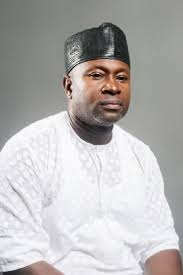
Chinedum Ukaegbu
National Chairman of the Allied People’s Movement (APM) and Chairman of the Inter-Party Advisory Council (IPAC), Alhaji Yusuf Dantalle, has strongly defended the presidential ambition of Oyo State Governor, Seyi Makinde, describing him as a tested leader capable of repositioning Nigeria and restoring public confidence in governance.
Speaking during an appearance on Frontline, a current affairs programme on Eagle 102.5 FM, Ilese Ijebu, Ogun State, on Monday, Dantalle said the decision of the APM to adopt Makinde as its presidential candidate was based on his proven record of leadership and governance in Oyo State.
According to him, democracy thrives when citizens are empowered to choose leaders who genuinely represent their political, economic and social interests.
“Democracy is about the people.
Democracy is about people making the right decisions that represent their interests politically, socially, economically and otherwise,” he said.
Dantalle argued that Governor Makinde’s administration in Oyo State provides a practical example of what effective leadership can achieve when driven by competence and vision.
He noted that the state has experienced significant transformation in infrastructure development, economic growth and security under Makinde’s watch.
“If you have been to Oyo in the past, maybe nine or ten years and then you are in Oyo now, you know that this is not the Oyo of that period. You see the infrastructure, you see the livelihood of the people, the economic stability and the relative peace in Oyo,” he stated.
The APM chairman further described Makinde as a youthful and accomplished professional whose engineering background equips him with the analytical and problem-solving skills needed to address Nigeria’s complex challenges.
“With that performance, and a young man, an engineer, who feels he is capable compared to what we have seen around, he can steer the ship of Nigeria to the next level,” Dantalle said.
Expressing confidence in the governor’s presidential aspiration, he maintained that Nigerians would ultimately benefit from and appreciate Makinde’s leadership if elected president.
“Nigerians will be proud that they made the right choice by electing Seyi Makinde as President of this country,” he declared.
Dantalle also shed light on the ongoing political realignments across the country, attributing them largely to internal crises and legal uncertainties affecting some political parties, including the Peoples Democratic Party (PDP).
According to him, many politicians seeking to preserve their political aspirations have found a viable platform in the APM while efforts continue to address challenges in their former parties.
“The legal health of PDP and a few other parties is what it is today. In their rational thinking, they decided that they would not allow their party to die, but for want of time, they needed a platform that would provide them with the vehicle to pursue their political aspirations,” he explained.
He stated that Governor Makinde and several other politicians had formally joined the APM and would pursue their ambitions through the party’s platform.
“Today, Seyi Makinde is a member of APM,” Dantalle asserted.
The IPAC chairman disclosed that many aspirants who originally intended to contest elections under the PDP banner would now seek elective offices through the APM.
“All aspirants in PDP will run their race on the platform of APM,” he said.
Addressing concerns over political alliances, Dantalle emphasized that such collaborations are constitutional and have long been part of Nigeria’s democratic practice.
“In politics, an alliance of this nature is constitutional. It is allowed. What is important is how to drive interests within the ambit of the law,” he stated.
He recalled that a similar arrangement existed during the 2023 elections, when several parties, including the APM, collaborated with the PDP presidential campaign.
“In 2023, there was an alliance between PDP and APM and about five other parties that worked together with the presidential candidate of PDP. It is not something new,” he said.
Dantalle noted that the emerging alliance has significantly strengthened both parties and expanded their political influence ahead of future elections.
“The ranks of both the PDP and APM have swollen beyond what they were before now,” he added.
On the issue of Nigeria allegedly drifting toward a one-party state, Dantalle firmly dismissed the claim, insisting that the country’s democratic environment remains competitive and vibrant.
“I continuously disagree with anybody anytime who would say that Nigeria has drifted to one party. It is not a possibility,” he stated.
He pointed to the emergence of presidential aspirants across multiple political parties as evidence that democracy remains active and healthy.
“Today, you have presidential candidates of not less than ten parties that have emerged. Would you call that a one-party state?” he asked.
According to him, Nigeria’s size, diversity and complex political interests make one-party dominance unrealistic.
“Nigeria is too big for one party to accommodate the divergent interests and aspirations of Nigerians,” he argued.
Dantalle stressed that defections, disagreements and political realignments are normal features of democratic systems and should not be interpreted as signs of democratic failure.
“People participate in primaries, they become unhappy, they revolt, they resign their membership and move elsewhere. That is politics,” he said.
The IPAC chairman reaffirmed the council’s commitment to democratic consolidation and institutional reforms, insisting that the organization would never support any action capable of undermining democracy.
“IPAC will never be part of anything that will truncate democracy in Nigeria,” he declared.
He explained that the council’s mandate includes promoting dialogue, advocacy and collaboration among political stakeholders while serving as a bridge between political parties, the Independent National Electoral Commission (INEC) and the Nigerian public.
“IPAC as an institution is meant to deepen democracy through discussion, advocacy, intervention within the ambit of the law and bridging the gap between INEC, political parties and Nigerians,” he said.
Dantalle also criticized what he described as irregularities in some recent party primary elections, warning that such practices undermine democratic principles and public trust.
“You see people counting delegates from one to ten to fifteen to three thousand at once, and then we are expected to be called leaders,” he remarked.
He referenced reports of controversial consensus arrangements and allegations that some candidates emerged without genuine electoral processes.
Despite these shortcomings, he emphasized the need to preserve and strengthen democratic institutions rather than abandon them.
“We will never burn the house. We will not throw away the baby with the bath water. We will continue to work with all stakeholders,” he stated.
Speaking on electoral reforms, Dantalle observed that while many stakeholders desire improvements, the current Electoral Act remains binding until amended through legislative processes.
“The Electoral Act is already a law. The only way to change the law is through the National Assembly,” he explained.
He encouraged citizens dissatisfied with the current political system to actively participate in elections and use their votes to bring about desired changes.
“If you are not satisfied with the current composition of the National Assembly, vote them out and elect who you want,” he advised.
The APM chairman also advocated comprehensive reforms to local government administration, describing grassroots governance as essential to sustainable national development.
“The closest government to the people is the local government, and it must be strengthened,” he said.
Rejecting suggestions that local government autonomy should be curtailed, Dantalle maintained that the Nigerian Constitution clearly recognizes three tiers of government.
“The constitution of the Federal Republic of Nigeria is clear that we have three tiers of government: federal government, state government and local government,” he said.
He argued that empowering local governments would help address several socio-economic challenges, including rural poverty and migration to urban centers.
“Even if it is strengthened, it will reduce some of these anomalies. It will reduce rural-urban migration,” he noted.
On security, Dantalle expressed deep concern over the escalating wave of kidnappings, attacks on schools and violence against farmers and teachers across the country.
“It is so bad that criminality has become a norm. Criminals don’t even hide their faces anymore,” he lamented.
Questioning the motives behind persistent violence, he condemned attacks on innocent citizens and warned that insecurity poses a serious threat to national development.
“Why would somebody derive pleasure in kidnapping, in killing a young man, in slaughtering a teacher or a farmer? What is their crime?” he asked.
He warned that the continued targeting of schools, communities and agricultural areas could undermine education, food security and rural development.
“Indirectly, there is a design by invisible hands to destroy our educational system, our villages and our agricultural sector,” he stated.
Dantalle emphasized that solving Nigeria’s challenges requires collective commitment from political leaders, institutions and citizens.
“We have no other country to run to. Whatever we are doing today, all of us should look at the interest of Nigeria,” he said.
While acknowledging that many of the country’s problems predate the current administration, he stressed the need for urgent corrective measures.
“The process of destruction of this country did not start today. It did not start yesterday. It did not start with this administration. It is a process. But we have to come back,” he noted.
He also lamented the worsening economic hardship confronting ordinary Nigerians, citing rising fuel costs, inflation and declining purchasing power.
“Nigerians are suffering, whether we like it or not,” he declared.
Dantalle concluded by aligning the APM’s vision with what he described as Governor Makinde’s agenda for national renewal and institutional rebuilding.
“My candidate, Engineer Seyi Makinde, said that we should reset Nigeria. Resetting Nigeria means going back to the foundation,” he said.
He called for transparent electoral processes that would enable Nigerians to freely choose leaders capable of serving their interests and advancing national development.
“Allow the electoral process to be transparent so that people can elect who they want and who they believe can serve their interests. It is an appeal to all of us to love this country,” he concluded.




Return of Garrison Politics: Warning shots to democracy!
By Asiwaju Kunle Kalejaye SAN Chief Jonathan Akinremi Odebiyi(1923 -2005) wa…