Ignorance fuelling national disputes, says Niyi Akintola, as he clarifies Olubadan structure

Michael Olumide
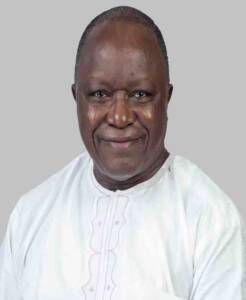
Legal luminary, Chief Niyi Akintola SAN, has said that one of the major challenges confronting Nigeria is widespread ignorance and a lack of proper understanding of law and culture, noting that many public controversies are fueled by misinformation and incomplete knowledge.
Speaking on Sabenko, a programme on Eagle 102.5 FM, Ilese-Ijebu in Ogun State, Akintola stressed that ignorance continues to distort national discourse, especially on issues relating to legal interpretation, traditional institutions, and cultural practices.
According to him, “one of the things disturbing the country is ignorance and lack of knowledge, and whoever lacks wisdom will have problems,” adding that many societal disputes arise from misrepresentation of facts and poor understanding of legal structures.
The Senior Advocate maintained that the law does not work against culture but rather reinforces it, explaining that both systems are meant to complement each other in a properly organised society.
“Law does not disturb culture; rather, it strengthens it. Each person has their own level of knowledge, and one of the problems we have in Nigeria is that some people believe what they do not know does not exist, not knowing that law and culture do not oppose each other,” he said.
He further warned against the promotion of harmful cultural practices, noting that negative traditions such as those involving violence or killings are often wrongly defended, while positive cultural values are ignored.
Akintola added that for any legal system to be effective, it must reflect the culture of the people it is meant to govern, stating that laws disconnected from societal realities often struggle with enforcement and acceptance.
Turning to the Ibadan traditional institution, Akintola addressed what he described as widespread misconceptions surrounding its structure and historical evolution.
He explained that prior to Nigeria’s independence, much of the present-day Osun State, except areas like Ilesa and Ile-Ife, fell under the Ibadan administrative and traditional influence through the Ibadan District Council.
He referenced historical administrative reforms, noting that in 1955, the late Chief Obafemi Awolowo created divisions such as Osun Division, Remo Division under Ijebu-Ode, and Egbado Division.
According to him, these divisions later evolved into present-day state structures, with several areas historically tied to Ibadan’s traditional authority.
Akintola further explained that Ibadan’s traditional hierarchy is rooted in a structured Mogaji system, under which leadership progression is clearly defined.
He noted that misunderstandings often arise when outsiders attempt to interpret or participate in the system without proper historical context.
He also recalled historical disputes involving chieftaincy claims, explaining that legal challenges in the past reflected attempts by individuals from outside Ibadan to assume roles within its traditional hierarchy, thereby creating confusion about eligibility and succession.
According to him, the Ibadan system is not arbitrary but highly organised, with clearly defined roles and progression paths under the Olubadan-in-Council structure.
He added that beyond the Olubadan and Iyalode, the system includes 11 high chiefs who operate within the established traditional framework, describing them as part of a well-defined administrative ladder.
Akintola also noted that members of the Olubadan-in-Council are recognised within the government structure, stating that once appointed, they function in a public capacity and are officially recognised by the state.
The Senior Advocate also traced recent reforms in the Ibadan chieftaincy system to consultations and legislative actions taken over the years.
He recalled that in 2007, traditional and political stakeholders, including late Chief Lamidi Adedibu and the then Olubadan, were part of discussions aimed at ensuring that members of the council remained non-partisan in politics.
He noted that the reform process involved wide consultations among Ibadan elites and traditional leaders, which eventually led to amendments in the chieftaincy law under former Governor Abiola Ajimobi, following public demand for clarity and restructuring.
Akintola explained that the same legal framework was later enforced by the administration of Governor Seyi Makinde, emphasizing continuity in governance rather than political interference.
He further cited provisions under Section 20 of the Oyo State Chieftaincy Law, explaining that appointments into the Olubadan-in-Council follow a defined process in which the Olubadan presents nominees to the governor for formal approval and installation.
He dismissed claims that recent appointments were solely determined by the state government, insisting that recommendations originate from the traditional institution itself.
Addressing concerns raised over the absence of newly elevated chiefs at a recent ceremony, Akintola dismissed such criticisms as a misunderstanding of administrative procedures.
He compared the process to civil service promotions, noting that individuals are not required to physically present themselves at the point of announcement.
“Do civil servants present themselves when they are promoted?” he asked, adding that traditional elevation follows established protocols rather than public spectacle.
He attributed the spread of such narratives to misinformation and a lack of proper knowledge about institutional procedures.
On whether traditional rulers can hold political office, Akintola said such matters are ultimately determined by constitutional interpretation and judicial processes.
He noted that in several cases across Nigeria, individuals have had to resign from public or professional roles before ascending traditional thrones, citing examples from various regions and royal institutions.
Akintola further described Ibadan as a highly structured traditional city with 33 towns under its influence, where high chiefs play administrative and cultural roles across different jurisdictions.
He likened the Olubadan system to hierarchical monarchies globally, stating that it functions in an organised chain of command similar to systems seen in other established traditional institutions.
“There is no crisis between the governor and the Olubadan. Claims of conflict are false and misleading,” he said.
He concluded by reiterating that misunderstanding of law and culture remains a major barrier to national development, urging Nigerians to seek knowledge before forming public opinions on sensitive cultural and legal issues.





Abiodun unveils ambitious energy blueprint to make Ogun Nigeria’s power hub
Michael Olumide In what many observers have described as one of the boldest energy reforms…