

This thing we call war

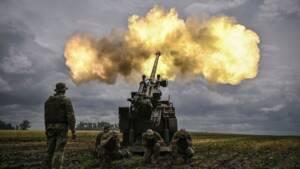
At the war front,
nothing smells like the world you knew.
The air is a burnt mixture—
dust, rust, old sweat,
& something nameless
that sits on your tongue
like the spoilt juice
of a fruit you once loved
but now cannot swallow.
The sky is always the wrong colour:
too bright when your heartbeat gallops,
too dull when your eyes search a flicker to grip,
too wide when someone whispers,
“Don’t leave me.”
You hear everything.
Every shuffle of boots,
every nervous breath,
every distant rumble—
each one a question
your body answers with a shiver.
& then
there are the sounds
you never forget:
lipstick-stamped letters
reading in the hiding,
a soldier humming to calm his hands,
the fracture in another’s voice
when they say a name
that now feels too heavy.
You feel the ground quivering
beneath your palms,
warm & cold at the same time,
as if the earth is trying to
breathe through the fear.
You taste dryness.
Sand.
Old prayers.
The bitterness of a promise you made
to return home whole,
even though the wind keeps telling you
that no one returns
the same.
& sight—
sight is the cruelest sense of all.
You see the Cherry beside you
transformed into an open vase.
The gun coughs once
& his skull pours out
in streaks across your cheek.
The wet grey matter, thick as paste,
sticks to your brow like a smeared skin.
You dare not raise a hand to wipe,
not even as it slides down warm
& nears your waiting mouth.
A second’s empathy’s a lifetime’s end.
You see boys with old men’s shoulders,
fingers clutching charms from mothers
who kissed them goodbye in another world.
You see a friend’s chest
soaked red through his camo,
his breath a ragged sieve,
the hole beneath his shoulder blade
gaping like a second mouth.
& later, dragging him through rubble,
his blood oiling the stones,
you feel his weight go true,
see his eyes fix on yours:
wet, animal, understanding.
Your arms are straw, your breath is glue.
So you press the barrel close
to the soft temple, the still-damp hair.
You give him what the world has taken:
a quiet without echo.
You carry that sound instead of him.
At night,
the war goes quiet
in the most excruciating way.
The silence presses against your ears
until you hear
your own heartbeat arguing with itself:
Why am I here?
Who will I be after this?
What part of me will be missing
when morning comes?
In the dim light,
a soldier reaches for a photograph
with shaking fingers.
He touches each face gently
as if the paper might bruise.
He smiles—
a small, tired, almost-broken smile—
& whispers a promise
he’s not sure he can keep.
& when the sun rises,
too bright on exhausted eyes,
the soldiers stand again,
not because they feel brave,
but because they must,
each step heavy
with the memory
of everything & everyone
they’re still trying
to hold on to.
This thing we call war
is not a bouncing castle;
the slow swallowing of laughter,
the fading of familiar scents,
the dimming of colours,
the ache that settles in your chest
& refuses to leave.
This thing we call war
is not a bouncing castle!
Majekodunmi O. Ebhohon is a Nigerian poet and playwright. He is the author of ‘The Great Delusion’, winner of the ANA Prize for Drama, 2025. He writes from Benin City, Edo State, Nigeria.
sankara101010@gmail.com
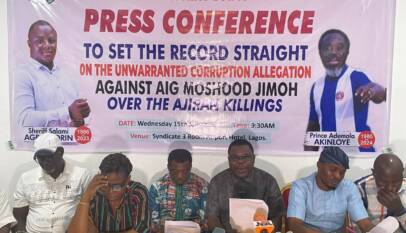



From court file to social media: How Ajiran suspect’s lawyer allegedly obtained documents now used by VDM
Michael Olumide Alabi The ongoing trial of Ahmed Tajudeen Akanbi, a declared fugitive and …