Grassroots advocacy restores 270 health centres across communities

By Prosper Okoye
Across 21 states in Nigeria, 270 deteriorating health facilities have been revitalised through sustained advocacy and community mobilisation, with support from local authorities and philanthropists driving the transformation.
The development was disclosed by the AIDS, Tuberculosis and Malaria (ATM) civil society networks during a media roundtable in Abuja on Wednesday.
The networks include the TB Network, the Network of People Living with HIV/AIDS in Nigeria (NEPWHAN), and the Civil Society in Malaria Control, Immunisation and Nutrition (ACOMIN).
Programme Manager at TB Network, Teresa Laraba Jatau, said the project, driven by the COVID-19 Response Monitoring/Results Support for Strengthening Health Systems (C19RM/RSSH) grant, “was designed to work with the community, for the community,” addressing unique needs in each area. Where clinics lacked staff, electricity, or water, Community-Led Monitoring Teams (CLMTs) identified local philanthropists and advocated for support.
“The core of the C19 investment from the COVID-19 era to the post-COVID period was ensuring communities played a central role in revitalising healthcare services,” she said.
CLMTs encountered dilapidated structures with leaking roofs, fallen ceilings, muddy floors, and no toilets. Some facilities were completely rebuilt following advocacy efforts. State Advocacy Teams (SATs), composed of ATM coordinators for TB, malaria, and HIV, engaged commissioners of health to address staffing gaps and improve service delivery.
In Lagos, one clinic was temporarily relocated to a primary school while new blocks, electricity, water supply, and refurbished beds were installed.
Jatau emphasised that community ownership ensures continuity. “Even after the C19RM programme ended, CLMTs remain active. We urge the government to ensure access to quality care and affordable medicines,” she said.
NEPWHAN Programme Manager, Dr Ismaeel Danesi, highlighted persistent staffing shortages. “Many health centres operate with only one to three staff despite large patient loads. Long queues discourage patients, affecting health outcomes,” he said.
He urged governments at all levels to deploy more personnel and address facility gaps.
Dr Danesi noted that the C19RM grant, provided through Global Fund support, ends in December, signalling the need for domestic resource mobilisation to sustain gains.
Monitoring and Evaluation Manager at ACOMIN, Lovelyn Agbo Gabriel, said the project demonstrated how community-led accountability strengthens health systems. Communities now track service delivery, flag gaps, and accompany CLMTs on advocacy visits, ensuring resources reach the intended facilities.
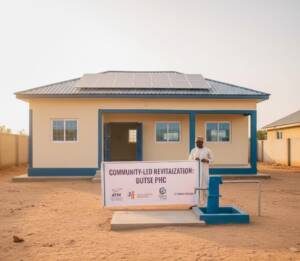
Gabriel cited a primary healthcare centre in Dutse, Jigawa State, which was small, dilapidated, and lacked electricity.
Advocacy efforts led to its inclusion in the state’s upgrade plan. The renovated facility now features multiple wards, a solar system, running water, and improved infrastructure, significantly enhancing service delivery and health outcomes.


Marwa receives Alaafin, secures royal backing for anti-drug campaign
Stanley Ihedigbo Alaafin of Oyo, Oba Abimbola Owoade, has pledged his support and collabor…