
2027 elections, fallacy of treasury savings

By Kenechukwu Aguolu
If leaving billions of naira in government coffers and exiting office without borrowing or outstanding loans were the ultimate signs of good governance, then perhaps the best government would simply be the one that spent the least. But governance cannot be reduced to the size of a bank balance. When pressing needs abound, and available resources are left unused, excessive caution can sometimes reflect a lack of initiative rather than exceptional leadership.
The real question is what public resources achieve. Can citizens point to better roads, schools, hospitals, security, jobs, housing, and economic opportunities? Fiscal discipline matters, but the government also has a responsibility to invest in development and improve the quality of life of its citizens.
This will be particularly important as Nigerians approach the 2027 presidential election. Candidates who have previously held leadership positions will present their records and highlight their achievements. Voters should therefore look beyond how much money they claim to have left in government coffers and focus instead on the impact of their tenure—the infrastructure delivered, lives improved, institutions strengthened and opportunities created for citizens.
This is where President Bola Ahmed Tinubu’s administration deserves serious consideration. The President inherited significant economic challenges and embarked on difficult reforms, including the removal of the fuel subsidy and foreign-exchange reforms. While these measures created hardship for many Nigerians, they were aimed at addressing longstanding distortions and establishing a more sustainable economic framework.
The administration has also pursued major infrastructure projects, including the Lagos-Calabar Coastal Highway, Sokoto-Badagry Highway, and railway projects. If completed effectively, these investments can improve connectivity, reduce transportation costs, stimulate trade, and create employment.
Through NELFUND, the government has also expanded access to student financing, while housing and transportation initiatives seek to improve opportunities for Nigerians.
In the energy sector, expanding domestic refining capacity offers the prospect of reducing dependence on imported petroleum products, while CNG initiatives are intended to provide more affordable transportation alternatives.
The government has equally pursued increased revenue mobilisation, higher oil production, improved foreign-exchange management, and economic diversification through the solid minerals sector.
Security remains a major concern, but the administration has intensified military operations against terrorists and bandits, with improvements reported in some affected areas. Much more remains to be done, but sustained efforts to restore security are essential for economic activity and national development.
The administration has also reported progress in reducing the debt-service-to-revenue burden, potentially creating greater fiscal space for development. Recent increases in fuel prices must equally be viewed against global energy-market pressures, including tensions in the Middle East, although the government must continue to address the impact on households.
Borrowing, therefore, should not automatically be regarded as evidence of poor governance. The important questions are why the money was borrowed, the cost, the repayment capacity, and what the funds achieved. Productive borrowing that delivers infrastructure and economic value can be more beneficial than resources left idle.
The strongest case for President Tinubu in 2027 is continuity. Nigeria has embarked on a difficult transition that should be consolidated rather than repeatedly abandoned. Infrastructure projects require continuity, reforms require time, and businesses and investors need policy stability.
President Tinubu has demonstrated a willingness to make politically difficult decisions in pursuit of long-term economic objectives. His administration has initiated major infrastructure projects, expanded education financing, pursued fiscal and energy reforms, supported domestic refining, and intensified efforts to improve security.
The 2027 election should therefore not be reduced to who will leave the largest treasury balance or avoid borrowing. Nigerians should ask a more important question: what will the government leave behind for the people? On that measure, Tinubu’s ongoing reforms and projects provide a strong case for allowing the administration the opportunity to consolidate and complete the work already begun.
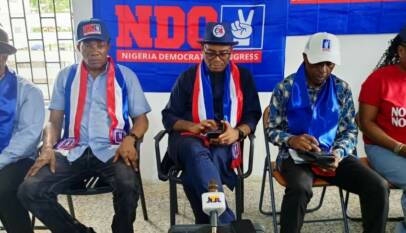

Obi, Kwankwaso Storm Uyo, promise production-driven Nigeria
Tony Okoh, Uyo Presidential candidate of the National Democratic Congress (N…