
Oyetola to address Blue Economy’s role in boosting local production at MARCON retreat

Stanley Ihedigbo
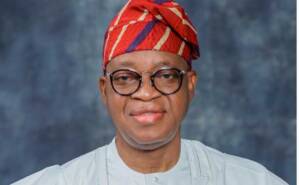
Nigeria’s drive to harness its vast marine resources for industrial development, increased local production and expanded export opportunities will take centre stage at the 2026 All Nigerian Maritime Journalists Retreat, where the Minister of Marine and Blue Economy, Adegboyega Oyetola, is expected to highlight how developing blue economy value chains can stimulate economic growth and strengthen the country’s export capacity.
The Minister is expected to present a paper titled “Developing Nigeria’s Blue Economy Value Chains to Drive Local Production and Export Growth” at the retreat, organised by the Maritime Correspondents’ Organisation of Nigeria (MARCON).
The subject places the blue economy within the broader conversation on economic diversification, industrial development and Nigeria’s capacity to produce goods and services that can compete in domestic and international markets.
With its extensive coastline, inland waterways and marine resources, Nigeria has opportunities to develop a wide range of economic activities across fisheries, aquaculture, shipping, shipbuilding and repairs, marine services and other related sectors. However, unlocking the full economic value of these resources requires more than their extraction or exploitation. It also depends on building the industries, infrastructure and support systems that can convert them into finished products and commercially viable services.
Developing stronger value chains could create opportunities for local businesses to participate more actively in production, processing, distribution and other stages of economic activity. It could also support job creation, stimulate investment, strengthen domestic industries and reduce dependence on imported goods and services in areas where local capacity can be developed.
The export potential is equally significant. By expanding local processing and production, Nigeria could increase the range of marine and blue economy-related products and services available for international markets, strengthen its non-oil export base and generate additional foreign exchange earnings.
Realising these opportunities, however, will require an efficient maritime transport and logistics system. Functional ports, competitive shipping services, improved inland waterway connectivity and effective trade facilitation remain important to moving locally produced goods from factories and coastal communities to domestic and international markets.
Investment, access to finance, technology, skills development, infrastructure and a supportive regulatory environment will also be important considerations in building competitive blue economy value chains. Effective collaboration among government institutions, private-sector operators, investors and other stakeholders will be central to translating the sector’s potential into sustainable economic activity.
MARCON Vice President and Chairman of the retreat planning committee, Paul Ogbuokiri, explained that the Minister’s presentation is expected to contribute to these conversations at a time when Nigeria is seeking to reposition its foreign trade and expand its productive capacity.
According to him, the topic aligns with the central theme of the retreat, “From Extraction to Exchange: Recalibrating Nigeria’s Foreign Trade to Realise President Tinubu’s $1 Trillion Productive Economy”, which reflects the need to move beyond dependence on importation and export of raw commodities towards a trade structure driven by local production, value addition, manufacturing and the development of competitive export industries.
“Within this framework, the blue economy represents an important area for examining how Nigeria can convert its natural resources and maritime advantages into productive economic activities. Its contribution to the country’s trade ambitions will depend not only on the availability of marine resources but also on the capacity to process, commercialise and move the resulting products and services to markets”, he added.
The Minister’s paper will form part of the policy and industry discussions, which is expected to bring together key stakeholders across the maritime sector, government and business community to examine issues affecting Nigeria’s ports, shipping, foreign trade, investment and economic development.
The 2026 All Nigerian Maritime Journalists Retreat will hold from December 2 to 4, with the main event scheduled for December 3 at De Marii Hotel FZE, Plot J 21, Xiamen Road, Lekki Free Zone, off Lekki Coastal Road, Ibeju Lekki, Lagos.
Through this year’s edition, MARCON seeks to deepen public understanding of the maritime sector’s contribution to national development and stimulate conversations on practical ways to strengthen its role in Nigeria’s economic transformation.
At the heart of the discussion is how the country can move from possessing vast marine and maritime resources to building productive value chains that support local industries, create jobs and position Nigerian goods and services for greater participation in global trade.




Over 100 beneficiaries receive support as Darlingtino Foundation empowers less privileged
Stanley Ihedigbo Member of the Board of Trustees of Darlingtin…