
Poor Nigerians deserve access to education without loan burden – Shittu

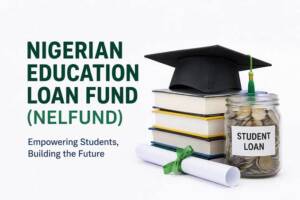
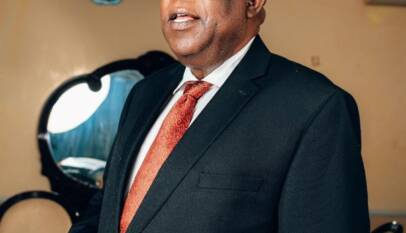
Former Minister of Communications, Dr. Adebayo Shittu, has called on the Federal Government to ensure that poor and underprivileged Nigerians have access to quality education without being burdened with student loans, insisting that education should be treated as a fundamental right and a government responsibility rather than a debt obligation for young people seeking to acquire knowledge.
Shittu made the call during an interview on ‘Frontline’, a current affairs programme on Eagle 102.5 FM, Ilese-Ijebu, Ogun State, where he expressed concern over the growing economic difficulties confronting Nigerian students and families, particularly those from disadvantaged backgrounds.
The former minister questioned the rationale behind the government’s reliance on student loans, especially when thousands of Nigerian graduates remain unemployed several years after completing their university education.
He argued that saddling young Nigerians with educational debts without providing adequate employment opportunities could further worsen their economic challenges.
“Today, we have in this country graduates who graduated ten years ago and are still looking for jobs. They don’t have jobs, and they are talking about giving them loans. I don’t believe in loans. I believe in fundamental rights,” he said.
Shittu urged Nigerians to examine the provisions of the 1999 Constitution on education, insisting that the government must demonstrate greater commitment to creating opportunities for citizens to acquire knowledge and develop their potential.
“I challenge everyone to go and look at the education objectives in the Constitution of Nigeria, the 1999 Constitution,” he said.
He also advocated a communal approach to educating children, recalling the traditional African value of collective responsibility in raising and providing for younger generations.
According to him, the responsibility for educating children should not rest entirely on individual families, particularly when many parents are struggling financially.
“In our local community, a child born into a community is the responsibility of the entire community to train, to educate and to provide for,” he stated.
The former minister maintained that the issue was largely about government priorities and the effective management of available resources, noting that previous administrations had demonstrated the possibility of investing in free education, healthcare and other essential social services.
He argued that Nigeria possesses the human and material resources required to improve access to quality education, pointing to Rwanda as an example of a country that has made significant investments in human-capital development.
Shittu also expressed concern over the level of economic hardship confronting Nigerians, revealing that he receives messages from students who struggle to afford basic necessities, including food.
He stressed that government policies should be assessed based on their impact on ordinary citizens, particularly vulnerable families and young people whose educational opportunities are increasingly threatened by financial difficulties.
The former minister further noted that sustained investment in education would help address several social and economic challenges by equipping young Nigerians with the knowledge, skills and competencies required to contribute meaningfully to national development.
He therefore called on the Federal Government to give greater attention to education, employment generation, vocational training and basic welfare, insisting that young Nigerians should be empowered through opportunities rather than burdened with debts in their pursuit of education.


Broken glue: Why an unreformed NYSC can no longer hold Nigeria together
By Asiwaju Kunle Kalejaye SAN Fifty-three years ago, in the fragile aftermat…