

Farmstarck: Building digital infrastructure for Africa’s next food economy


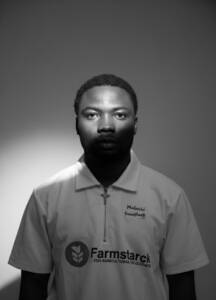
Founder and Chief Executive Officer, Farmstarck Nigeria, Mr. Malachi Chidera, is a visionary Nigerian agripreneur, technology advocate and business strategist with more than 15 years of experience in agriculture and over five years of expertise in digital marketing, blockchain analysis and operations management.
He is the founder of Farmstarck, an innovative agri-tech startup revolutionising food security, farm-produce distribution and agribusiness scalability across Nigeria and Africa.
He shares with Caleb Ohaeri his organisation’s activities and other issues.
What inspired you to establish Farmstarck, and what specific problem in Nigeria’s agricultural sector were you seeking to solve?
Farmstarck began with my mother. I grew up watching her farm. She worked from planting through harvest with a diligence I have rarely seen matched in any boardroom, and still she struggled to get a fair price for what she produced.
What stayed with me was that her difficulty had almost nothing to do with how well she farmed. It was everything around the farming: who she could sell to, what price she was offered, how the produce would move and whether payment would come.
That is the pattern across Nigerian agriculture. We are not failing to produce food. We are losing too much of its value between the farmer and the person who eventually eats it.
A farmer in Benue sells a tuber for a price that barely covers his costs. A household in Lagos pays several times that figure for the same tuber. Between them sit four or five intermediaries, none of whom planted anything.
Farmstarck exists to close that distance. We buy directly from farmers at fair prices, move the produce ourselves and supply merchants without the layers in between. The farmer earns more, the buyer pays less, and the margin that used to disappear into the middle now funds the infrastructure that makes the system work.
Since August 2025, we have onboarded more than 200 verified farmers, delivered more than 60 tonnes of agricultural produce and built recurring procurement relationships with 23 merchants and agribusinesses across Benue, Taraba, Enugu, Port Harcourt and Lagos. More than 300 consumers currently trade with us, largely through WhatsApp, while the wider platform is being built out.
So, Farmstarck is not, for me, primarily a technology company. It is an attempt to solve a problem I watched at close range for most of my life.
Farmstarck describes itself as an AI-powered agricultural marketplace and agri-social commerce platform. What does this mean in practical terms for the average Nigerian farmer?
It means the farmer no longer has to accept whatever price arrives at his gate. Today, most smallholder farmers sell to whoever turns up. They have no visibility into what their produce is worth in Lagos or Port Harcourt, no direct route to a buyer and no leverage in the negotiation.
We change that by aggregating demand before we ever arrive at the farm. Because we already know what our merchants need and in what volume, we come to the farmer with a confirmed buyer and a fair price rather than a lowball offer.
The platform brings together four functions that currently sit apart. Our marketplace connects farmers to merchants, businesses and consumers.
Our procurement service aggregates supply from farm clusters and matches it to bulk demand. Food Vault helps households save towards future food purchases, redeemable for food rather than cash.
Creator Feeds allows farmers, chefs and agricultural educators to build an audience around food and sell directly into it.
The AI layer sits on top of all of this. It is being built to improve sourcing decisions, pricing and demand forecasting, and to let buyers discover produce through ordinary conversation rather than search.
That component is in development and will roll out through 2027. I would rather describe accurately what we have built than overstate what is still coming.
For the farmer, the outcome is simpler than any of this sounds: a reliable buyer, a fair price and payment that actually arrives. How is Farmstarck helping farmers gain better access to markets and obtain fairer prices for their produce?
The core problem is fragmentation. A farmer may produce well and still have no idea who needs his crop, in what quantity, at what price or how to get it there.
We work through farmer clusters and cooperative union leaders rather than approaching individuals in isolation. This matters because trust in rural agricultural communities is institutional rather than transactional.
When a union head vouches for us, we gain access to a network that would otherwise take years to build one farmer at a time.
Each procurement cycle sees us load full trucks, typically between 9,000 and 12,000 tubers, drawn from five or six farmers.
We confirm the buyer before logistics are triggered, which means no farmer is producing on speculation, and we are never left holding unsold stock.
Our margin is transparent and structural rather than extractive. We earn between 25 and 30 per cent on procurement and that covers logistics, quality control, field operations and working capital. The farmer knows what he is being paid and why. That is a fundamentally different relationship from the one he has with a middleman whose margin is invisible to him.
Nigeria continues to battle food insecurity and rising food prices. How can technology and platforms like Farmstarck help reduce the gap between farmers and consumers?
Food prices in Nigeria are high for reasons that have surprisingly little to do with how much food we grow. We grow enough. The difficulty is that moving it from where it is grown to where it is eaten is expensive, slow and unreliable, and every inefficiency in that chain is eventually priced into what a family pays at the market.
Technology addresses this by removing coordination costs. When a platform knows what buyers need before produce leaves the farm, there is no wasted movement, no unsold stock and no distress selling. When payment is digital and traceable, there is less need for the layers of intermediaries who exist largely to absorb risks that better information could have eliminated.
Food Vault matters here, too, because food security is not only a question of whether food exists. It is also a question of whether households can plan and afford access to it.
A family buying in small daily quantities pays significantly more over a month than one able to plan and buy ahead. Helping people save towards food is a direct intervention in that problem.
What we are building is not a technology product that happens to touch agriculture. It is agricultural infrastructure that happens to be digital. The distinction matters because the binding constraint in Nigerian food systems is rarely the application. It is the road, the truck, the storage and the trust.
One major challenge in agriculture is post-harvest losses. What solutions is Farmstarck developing to reduce waste between the farm, market and final consumer?
I will be direct about this because post-harvest loss is a problem our sector discusses more often than it solves.
Our current model addresses it structurally rather than technologically. We operate on a confirmed-buyer basis, which means produce does not leave the farm until it has somewhere definite to go. Our procurement cycle runs roughly six weeks from sourcing to final payment, with the produce actually in transit for under a week of that. There is no warehouse phase in which crops sit and deteriorate. That design eliminates an entire category of loss before it can occur.
But it also constrains us, and I think it is worth admitting. Because we do not yet have cold-storage infrastructure, we work primarily with dry goods such as yams, maize and cassava, which tolerate that movement. Perishables, which are precisely where Nigeria’s post-harvest losses are most severe, remain largely outside what we can handle at scale.
Cold storage is therefore the single biggest constraint on our expansion, and we are actively pursuing partnerships to address it. Solving it would open up tomatoes, vegetables and fruit, and would let us confront the part of this problem that matters most.
It would be dishonest to claim we have solved post-harvest loss. We have designed around it, and we are building towards the infrastructure that would allow us to attack it directly.
How does Farmstarck use Artificial Intelligence and data to improve agricultural sourcing, pricing and supply-chain management?
Our advantage today is operational data rather than algorithms, and the distinction is worth drawing precisely.
Every procurement cycle generates information that very few players in this market hold: what a farmer in a given cluster can supply and when, what a truck genuinely costs to move between two specific points, what merchants in each city will pay at different times of year, and how those figures shift with season and fuel prices. None of that is publicly available anywhere in Nigeria. We are accumulating it cycle by cycle.
The Farmstarck AI Copilot is being built on that foundation. It will let buyers discover produce through natural conversation rather than search, and will support pricing and demand forecasting internally. It is in development, with deployment planned through 2027.
The long-term objective is for the platform to become predictive rather than merely transactional. Not simply telling stakeholders what has happened, but helping them understand what is likely to happen next and what decision that suggests. The intelligence layer is real, and it is being built. But the value beneath it is the proprietary operational data, and that is what we are generating today.
Farmstarck is bringing farmers, merchants, consumers and businesses into one ecosystem. How do you intend to build trust and ensure the quality and authenticity of agricultural products traded on the platform?
Trust in this sector is earned physically before it can ever be earned digitally.
Our field operations team verifies every farmer we onboard. We do not accept produce sight unseen. Quality control happens at the point of loading rather than on arrival because a rejected truck in Lagos is a loss nobody recovers from. We maintain a dedicated quality-control and inspection function within our operating costs precisely because this cannot be left to goodwill.
On the buyer side, an administrator confirms the order before logistics is dispatched. That protects the merchant from receiving what they did not ask for and protects us from moving what nobody wants.
The union-leader model reinforces all of it. When a farmer is introduced through his cooperative head, that head’s standing within the community is attached to the transaction.
Accountability becomes social rather than merely contractual, which in rural Nigeria is considerably more binding than any clause.
As the platform matures, digital records, transaction histories and product traceability will carry more of this weight. Consumers increasingly want to know where their food comes from, and businesses need confidence in the consistency of supply. Our philosophy is that trust should be built into the infrastructure rather than left to chance.
What has been the biggest challenge you have faced since launching Farmstarck, and how have you overcome it?
Working capital, without question.
Procurement is capital-intensive in a way that software is not. A single truck represents roughly ₦20 million in produce. We pay farmers before merchants pay us, and larger institutional buyers can take up to four weeks to settle. That gap has to be funded, and until it is funded, the next cycle cannot run.
The clearest illustration is the demand we have had to turn away. We have received serious enquiries from major food manufacturers and processors for volumes running into hundreds of tonnes, including palm oil, dried cassava, soybeans, maize and poultry.
These were real conversations with real buyers. We could not fulfil them, not because the supply did not exist, but because we did not have the working capital to purchase at that scale and wait out the payment terms.
Losing orders you are otherwise capable of serving is a particular kind of frustration. It is also the clearest possible argument for why we are raising capital.
What we did in the meantime was design the business so that capital recycles rather than sits. Our procurement cycle averages six weeks, meaning capital turns eight to nine times a year, each turn earning its margin.
That structure is why we have remained profitable on an operating burn of roughly $700 a month while moving over 60 tonnes of produce.
We also chose to validate through procurement and WhatsApp commerce rather than waiting for the full platform to be finished. That allowed us to work directly with farmers, merchants and consumers while building the technology in parallel. The lesson is that in African markets, you often have to build the technology and the market at the same time. Discipline can compensate for scarce capital for a period. It cannot substitute for it indefinitely.
What opportunities does Farmstarck see for Nigerian youths in agriculture, particularly in areas such as technology, logistics, digital marketing and agribusiness?
The belief that agriculture is where you end up when nothing else works is the most expensive misconception in this economy.
Our own team makes the argument better than I can. We are eight people, most of us young, and almost none of us are farmers. We have engineers building the platform, project management coordinating operations across five states, business development opening merchant channels, legal and finance structuring the company, and field operations managing farmer relationships on the ground.
Every one of those is an agricultural job. Not one involves holding a hoe.
The opportunity is not in going back to the farm. It is in building the infrastructure around the farm, which barely exists yet: logistics coordination, quality assurance, agricultural data, digital marketplaces, food-focused content and commerce, storage infrastructure and embedded finance. These are open fields with very few serious players.
Creator Feeds exists partly for this reason. A young Nigerian who understands food, farming, nutrition or cooking should be able to build an audience around that knowledge and convert it into commerce. The audience already exists. The infrastructure to monetise it through agriculture does not.
Agriculture employs the largest share of our workforce, yet its digital infrastructure sits roughly where financial services did 15 years ago. Anyone who watched what happened to Nigerian fintech in that window should understand exactly what that comparison implies.
Looking ahead, what is your vision for Farmstarck in the next five years, and how far do you want to take the platform across Nigeria and the rest of Africa?
In five years, I want Farmstarck to be the layer African food commerce runs on, in much the way payment infrastructure now sits invisibly beneath most commercial transactions.
The path runs through three phases. In the near term, we deepen in Nigeria, expanding from five states towards 15, launching our mobile application this September, and bringing the marketplace and Food Vault fully live. Beyond that, we build what is currently missing: cold-storage capacity to reach perishables, creator-led commerce and the AI layer that makes discovery and pricing intelligent. Then comes regional expansion into ECOWAS markets, where the same structural problem exists, and the same infrastructure would solve it.
We are currently raising a $200,000 pre-seed round to accelerate technology development, operations, farmer and merchant onboarding, logistics and compliance, positioning the company for a larger seed round thereafter.
But the measure I actually care about is not valuation. It is whether the farmer in Benue earns materially more per tuber than he does today, and whether the household in Lagos pays materially less. If those two numbers move, everything else follows.
Can Farmstarck become the digital infrastructure driving Africa’s next food economy?
Africa’s food economy moves over a trillion dollars a year, and almost none of it runs on infrastructure anyone built deliberately. It moves through relationships, cash, informal credit and trust between people who know one another.
That system is remarkably resilient, which is why it has survived. It is also expensive and opaque, and it places a hard ceiling on how large any participant within it can become.
The question is not whether that infrastructure eventually gets built. It is being built now by someone. The real question is who builds it and whose interests it ends up serving.
What gives me confidence that we can be part of the answer is that we started from the physical problem rather than the digital one. We did not build an application and then go looking for farmers.
We ran procurement across five states, learned what a truck actually costs, learned how long a merchant really takes to pay, and learned which farmers deliver and which do not. The platform is being built on top of operational knowledge rather than in place of it.
That sequencing matters enormously. A great deal of African agritech has failed by building elegant software for a supply chain its founders had never operated. The infrastructure that ends up mattering will be built by people who understand the road as well as the code.
We also believe these problems are connected in ways that are usually treated separately. Farmers struggle to reach markets. Businesses struggle to source reliable supplies. Households struggle with affordability and planning. Creators have audiences but no infrastructure to convert influence into agricultural commerce.
Farmstarck combines marketplace, procurement, food savings, data and social commerce because we think solving any one of these in isolation leaves most of the value on the table.
Creator Feeds is a good illustration. A farmer can tell the story of his farm and sell his produce from within it. A chef can share a recipe and let viewers buy the ingredients directly. An agricultural educator can build expertise in commerce. Content, community and transactions stop being separate activities.
We are early, and I would not pretend otherwise. We are 200 farmers and 23 merchants, not 200,000 and 23,000. Our AI layer is in development. Our cold storage does not yet exist. We have turned away orders we were not equipped to fulfil. But we are profitable, we are Capital-efficient, and every procurement cycle teaches us something that cannot be learned any other way.
For me, it also brings the journey full circle. Farmstarck began with watching one farmer struggle, and that farmer was my mother. The ambition now is to build infrastructure that lets millions of farmers across Africa face fewer of those same struggles.
So, can Farmstarck become that infrastructure?
I believe we can. But I would rather be judged on whether we actually do it than on how convincingly I said so. The work is the argument.



“We’re leveraging technology to make genuine medicines accessible to Nigerians”, AHA CEO
Founder and Chief Executive Officer, Advantage Health Africa (AHA), Mrs. Abimbola Adebakin…